
Free written scope consultation - allowances, timeline, and change-order rules on paper before a single trade is scheduled
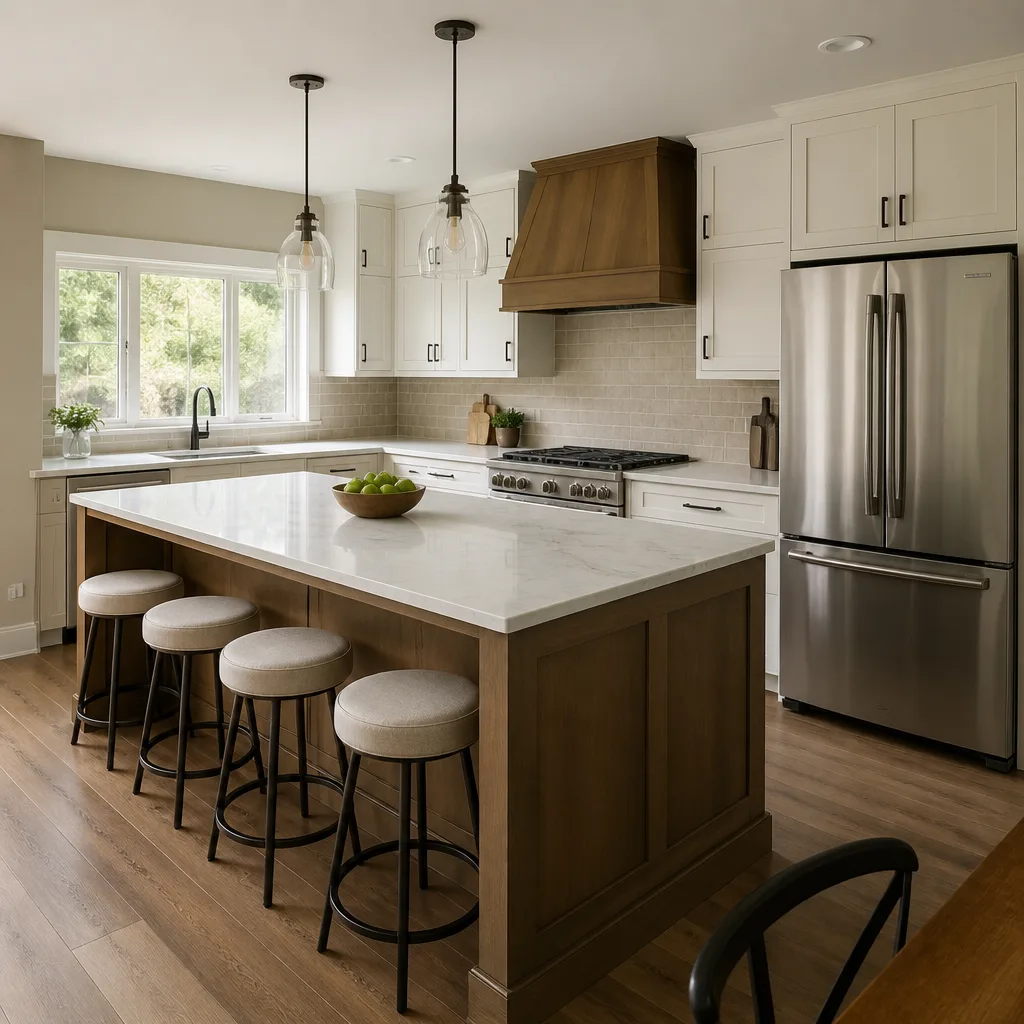
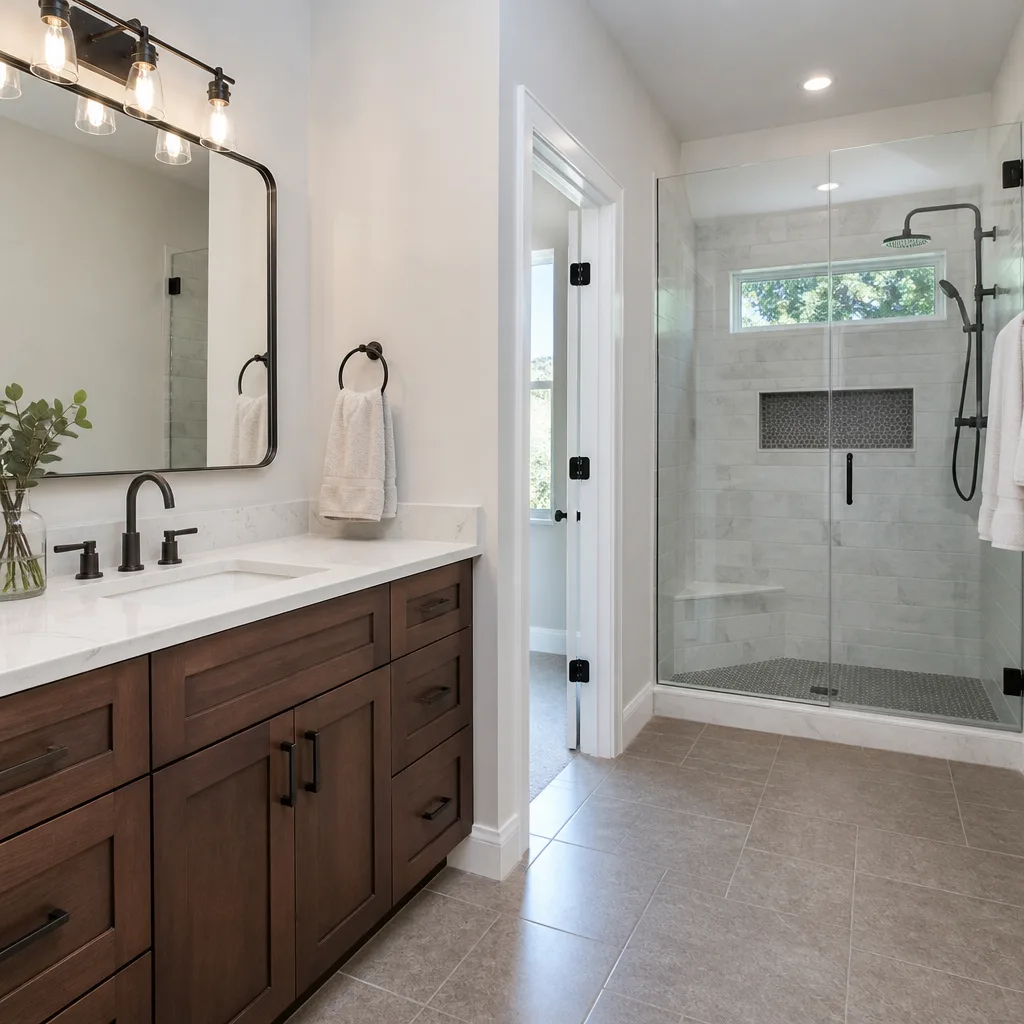


 Before
 After
After Before
 After
After Before
 After
AfterBacksplash, Tile & Flooring in Los Angeles, CA
Backsplash, tile, and flooring work in a Los Angeles kitchen covers the installation of ceramic, porcelain, natural stone, or glass tile on walls and floors – including the substrate preparation, waterproofing membrane, and grouting that determine whether the installation lasts five years or twenty-five. Rowan Construction Group has been quoting and executing this work since 2007, with a written flat price and written scope delivered before any tile is cut. If you want to talk through what your kitchen needs, call us at (213) 652-7670 – a live person answers, any hour of the day.
This page sits under our full Kitchen Remodeling in Los Angeles service, which covers everything from cabinetry and countertops to layout changes. Backsplash and flooring are often the last trades to finish and the first thing visitors notice, so getting the substrate right and the layout centered correctly matters more than most homeowners realize until the job is done.
In Los Angeles specifically, we see a few conditions that come up on nearly every job: older homes in neighborhoods like Silver Lake, Echo Park, and Mid-Wilshire often have multiple layers of existing tile over concrete board that wasn’t properly waterproofed to begin with. Homes in coastal zones like Venice or Playa del Rey show more grout and caulk failures from humidity cycling. And tract homes built in the 1980s and 1990s across the San Fernando Valley frequently used mastic adhesive directly over drywall – a shortcut that fails when moisture gets behind it. We document what we find before we quote what it costs to fix.
When You Need Backsplash, Tile & Flooring
- Grout is cracking or discolored across more than a few joints. Hairline cracking in individual grout joints is normal wear. When cracking runs in a pattern – especially diagonally or at corners – it typically means the substrate underneath has shifted or was never properly bonded. In older Los Angeles homes, this often traces back to mastic failure or a missing uncoupling membrane beneath the tile.
- Tiles are hollow-sounding or lifting at the edges. Tap a suspect tile with a coin or knuckle. A hollow sound means the adhesive bond has failed beneath it. Once one tile lifts in a wet area like behind the sink, water migration behind the others accelerates quickly.
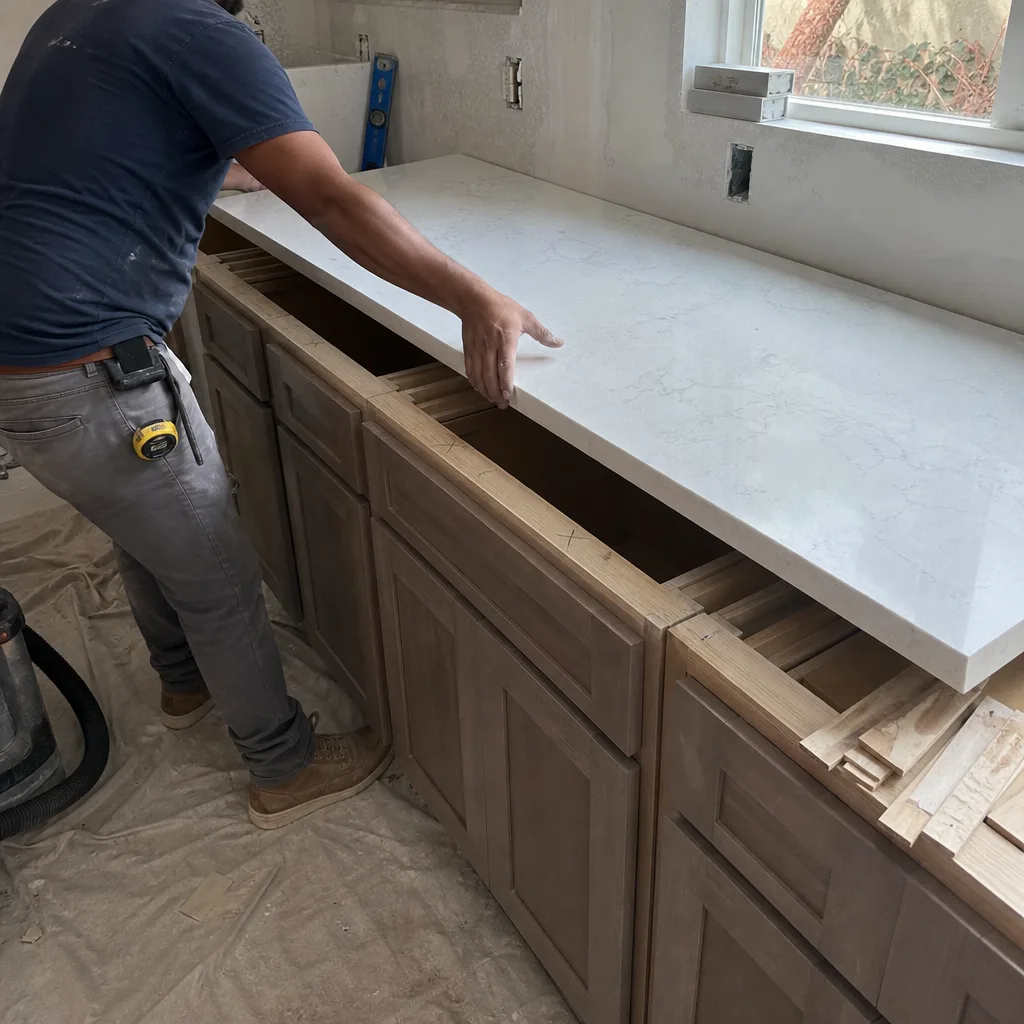
- You’re replacing countertops and the current backsplash height won’t clear the new countertop thickness. This is one of the most common triggers for a backsplash replacement we see on kitchen remodels in Los Feliz and Hancock Park – a new quartz or stone countertop sits slightly higher than the original laminate, and the tile line is now wrong.
- The kitchen was remodeled before 2005 and the floor tile is showing wear at pivot points. Floor tile around the refrigerator, the dishwasher, and in front of the sink takes concentrated foot traffic. Glazed ceramic tiles from that era tend to wear through the surface layer at those points before anywhere else, and the worn area can’t be patched invisibly – it needs full replacement.
- You’re doing a gut remodel and want the floor, backsplash, and countertop materials to coordinate. Choosing these three surfaces together – before any of them are installed – is far easier than matching them after the fact. Rowan sources from fifty-plus vetted material brands, so we can price a coordinated material package with a single written quote rather than leaving the client to reconcile three separate supplier invoices.
- The grout in a walk-behind backsplash area smells musty or shows surface mold. Mold on grout in a kitchen backsplash almost always means moisture is getting behind the tile, usually through failed caulk at the countertop-to-tile joint. The fix is more than cleaning the surface – it’s removing the affected section, assessing the substrate, and reinstalling with proper waterproofing.
Our Backsplash, Tile & Flooring Process
- Written assessment and flat-price quote before any work starts. Under Clause 1 of the Haven Standard, the price is written before anyone picks up a tool. We walk the kitchen, document the existing substrate condition with photographs, note any waterproofing deficiencies, measure the square footage, and deliver a written scope with a flat price. The photo record from this visit belongs to you – it’s a standard deliverable, not something we hold on our end. You’ll know exactly what we found, why it matters, and what it costs to address.
- Demolition and substrate evaluation. Existing tile is removed carefully, and the substrate – whether it’s concrete board, plywood, or the drywall we occasionally find behind older Los Angeles kitchen backsplashes – is evaluated for soundness, moisture damage, and levelness. If we find something that changes the scope, we write a signed change order before the work proceeds. No change moves forward on a verbal agreement.
- Substrate preparation and waterproofing membrane. This is the step that separates a tile job that lasts from one that fails. For kitchen floors, we install an uncoupling membrane (Schluter Ditra is the specification we use most often on concrete subfloors) to allow minor movement without cracking the tile above. For backsplash areas near the sink, we apply a waterproofing membrane at the countertop transition. The membrane, the fastener pattern, and the mortar bed thickness are documented in the photo record.
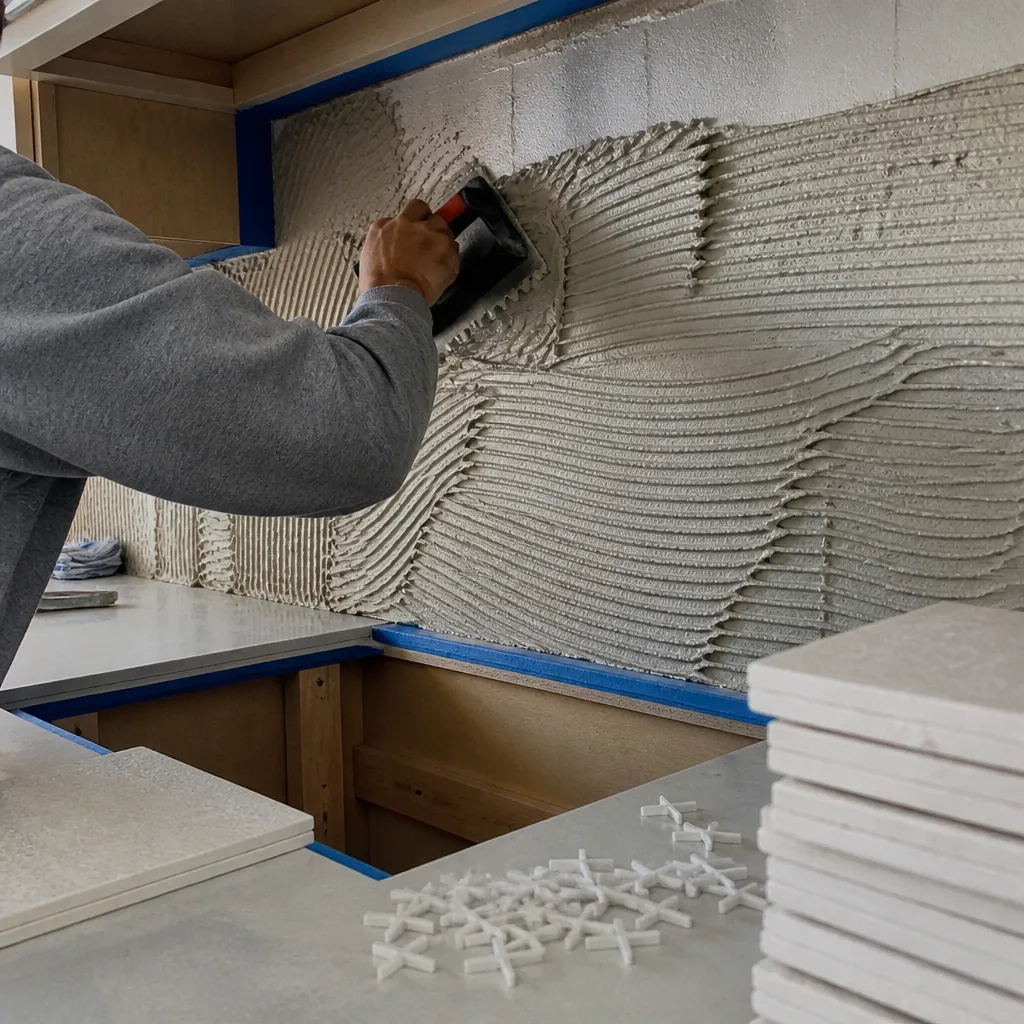
- Layout dry-run and tile cutting. Before any adhesive goes down, we dry-lay the tile pattern to confirm the layout is centered correctly on the dominant sight line – usually the range hood or the window over the sink. Subway tile layouts that start at a grout joint rather than a tile center are one of the most common complaints we hear from Los Angeles homeowners who hired a different contractor. We cut, check, and adjust before we commit.
- Setting, grouting, and caulking. Tile is set in thin-set mortar appropriate to the tile type and size (larger-format tiles require a medium-bed mortar to prevent lippage – the slight edge variation between adjacent tiles that catches light badly). Grout selection is documented in the written scope: unsanded for joints under 1/8 inch, sanded for wider joints, epoxy grout for areas requiring stain resistance. The countertop-to-tile joint is caulked rather than grouted – grout at that joint always cracks because the two surfaces move independently.
- Final inspection, photo record, and written warranty delivery. Before the crew leaves, we do a final inspection against the written scope, deliver the completed photo record of the install, and hand over the written warranty. The 365-Day Done Right Promise applies: if it’s not right, we make it right – that’s in writing, not in a handshake.
 Before
 After
AfterBacksplash, Tile & Flooring Pricing in Los Angeles
Backsplash, tile, and flooring installation in Los Angeles runs across a fairly wide range because the cost depends heavily on what’s behind the existing tile, what material you choose, and how complex the layout pattern is. Here’s what we see on actual jobs in the Los Angeles market:
| Scope | Typical Range (Los Angeles) |
|---|---|
| Standard subway tile backsplash, up to 30 sq ft, simple running bond pattern | $1,200 – $2,400 |
| Full kitchen backsplash with tile-to-ceiling at range, 40-60 sq ft | $2,200 – $4,500 |
| Herringbone, Moroccan, or custom pattern backsplash (same square footage, more cut waste and layout time) | $3,000 – $6,000 |
| Kitchen floor tile, 150-250 sq ft, porcelain or ceramic, standard layout | $4,500 – $8,500 |
| Large-format floor tile (24×24 or larger), same area, medium-bed mortar and leveling system required | $6,500 – $12,000 |
| Full backsplash and floor tile package, coordinated materials, typical Los Angeles kitchen footprint | $8,000 – $18,000 |
| Substrate remediation (failed mastic, missing waterproofing membrane, multilayer tile removal) | $500 – $3,000 added to base scope |
The numbers above reflect Los Angeles labor rates and material costs as of early 2026. What moves the price most in either direction:
- Substrate condition. A kitchen in a 1962 Woodland Hills home where mastic was applied directly to greenboard adds removal and re-board cost that a newer Sherman Oaks condo typically doesn’t need.
- Tile material and format. A 3×6 ceramic subway tile and a 24×48 rectified porcelain slab tile are both “tile,” but the labor, adhesive specification, and cutting equipment requirements are entirely different.
- Pattern complexity. A running bond backsplash uses roughly 10% more material (cut waste) than the same area in a vertical stack. A herringbone or Versailles pattern can run 15-20% more cut waste and requires significantly more layout time.
- Access and protection. A finished kitchen with installed cabinetry and appliances takes longer to tile around correctly than an open rough-in. Protecting countertops and appliances during a backsplash-only install is part of the job.
Every quote from Rowan is a flat written price with a written scope – not an estimate that grows after the crew arrives. If you bring us a written quote from another contractor, we’ll review it line by line at no charge under our Free Second Opinion offer. Call (213) 652-7670 to schedule, or to get a number for your specific job before committing to anything.
FAQs – Backsplash, Tile & Flooring
How much does backsplash installation cost in Los Angeles?
A standard subway tile backsplash in a Los Angeles kitchen typically costs between $1,200 and $2,400 for up to 30 square feet, with a more involved full kitchen backsplash running $2,200 to $4,500 depending on square footage and layout complexity. Custom patterns like herringbone or hand-cut tile push that range to $3,000-$6,000 or higher, mostly because of additional cut waste and layout time. Material cost is a smaller factor than most homeowners expect – labor and substrate prep are usually the bigger line items on Los Angeles jobs. Call (213) 652-7670 and we’ll give you a flat written price for your specific kitchen.
Do I need to replace the drywall or substrate before tiling a kitchen backsplash?
In many Los Angeles homes, yes – and finding out before the quote rather than after demolition is the reason we document the substrate condition with photographs before writing any price. Standard drywall behind a kitchen backsplash should be replaced with cement board or a waterproof backer in any area that gets moisture exposure, particularly behind the sink and at the countertop transition. Older homes in neighborhoods like Silver Lake, Echo Park, and parts of the San Fernando Valley frequently have original drywall or greenboard that was never suitable as a tile substrate. If we find it, we write it into the scope and the price before the crew starts – not after.
How long does a kitchen tile and backsplash installation take in Los Angeles?
A backsplash-only installation on a typical Los Angeles kitchen runs 2-3 days: one day for removal and substrate prep, one day for setting tile, and a return visit 24 hours later to grout and caulk after the thin-set has cured. A full kitchen floor tile project adds 1-2 days depending on square footage and whether the subfloor needs leveling or an uncoupling membrane. Jobs that require substrate remediation or multi-layer tile removal take longer, and the scope documents that timeline in writing before we start. We don’t quote a two-day job and take four – if the timeline changes because of what we find, a signed change order comes first.
Can I keep my existing tile and just regrout the kitchen backsplash?
Regrouting is possible and is the right call when the tile itself is sound and well-bonded but the grout has stained or cracked in isolated joints. It’s not the right call when tiles are hollow-sounding, when there’s mold at the countertop joint, or when the grout is cracking in a pattern across multiple courses – those symptoms point to substrate or bond failure that cleaning or regrouting won’t fix. We can assess the existing tile during the initial visit and tell you honestly whether regrouting will hold or whether it’s a surface fix on a deeper problem. That assessment is part of the written quote process, included at no charge.
Why Rowan Construction Group for Kitchen Tile in Los Angeles
Grant Rowan started this company in 2007 with one operating principle: the price is written before anyone picks up a tool. Across more than 4,000 projects since then, that discipline – Clause 1 of the Haven Standard – is what keeps Los Angeles homeowners from getting a different number at the end of a job than the one they agreed to at the beginning.
On tile and flooring work specifically, that discipline matters more than it might seem. Substrate surprises are real – we find failed mastic, missing waterproofing, and multi-layer tile stacks on a regular basis in Los Angeles kitchens. The difference is that we find them during the assessment, document them with photographs, and write the scope to address them before the work starts. When a homeowner in Los Feliz approves a substrate remediation on paper before the tile comes off the wall, there’s no argument about the added cost later. The signed change order is the record.
Our crews are background-checked and uniformed. The documented photo record from every visit – assessment, install, final – is a standard deliverable. The 365-Day Done Right Promise means that if the tile lifts, the grout cracks, or the layout is off, we come back and make it right. That’s in writing on every job, not something you have to ask for.
If you want to see how this fits into a full kitchen project, the Rowan Construction Group home page has the full scope of what we cover across seven residential trades. For tile and flooring questions specific to your Los Angeles kitchen, call (213) 652-7670 – a live person answers, any time of day, and a written price is the next step, not a ballpark over the phone.
Get a Written Price for Your Los Angeles Kitchen Tile Project
If you’re planning a backsplash replacement, a full kitchen floor tile project, or a coordinated tile package as part of a larger kitchen remodel in Los Angeles, the first step is a written number based on what we actually find in your kitchen. Call (213) 652-7670 to schedule the assessment. We’ll document what’s there, tell you what it means, and deliver a flat written price with a written scope before any work is discussed further. No pressure, no ballpark, no “call for a quote” runaround – the written price is the whole point.
Written by Grant Rowan, Owner at Rowan Construction Group Los Angeles, serving Los Angeles since 2007.