
Free written scope consultation - allowances, timeline, and change-order rules on paper before a single trade is scheduled
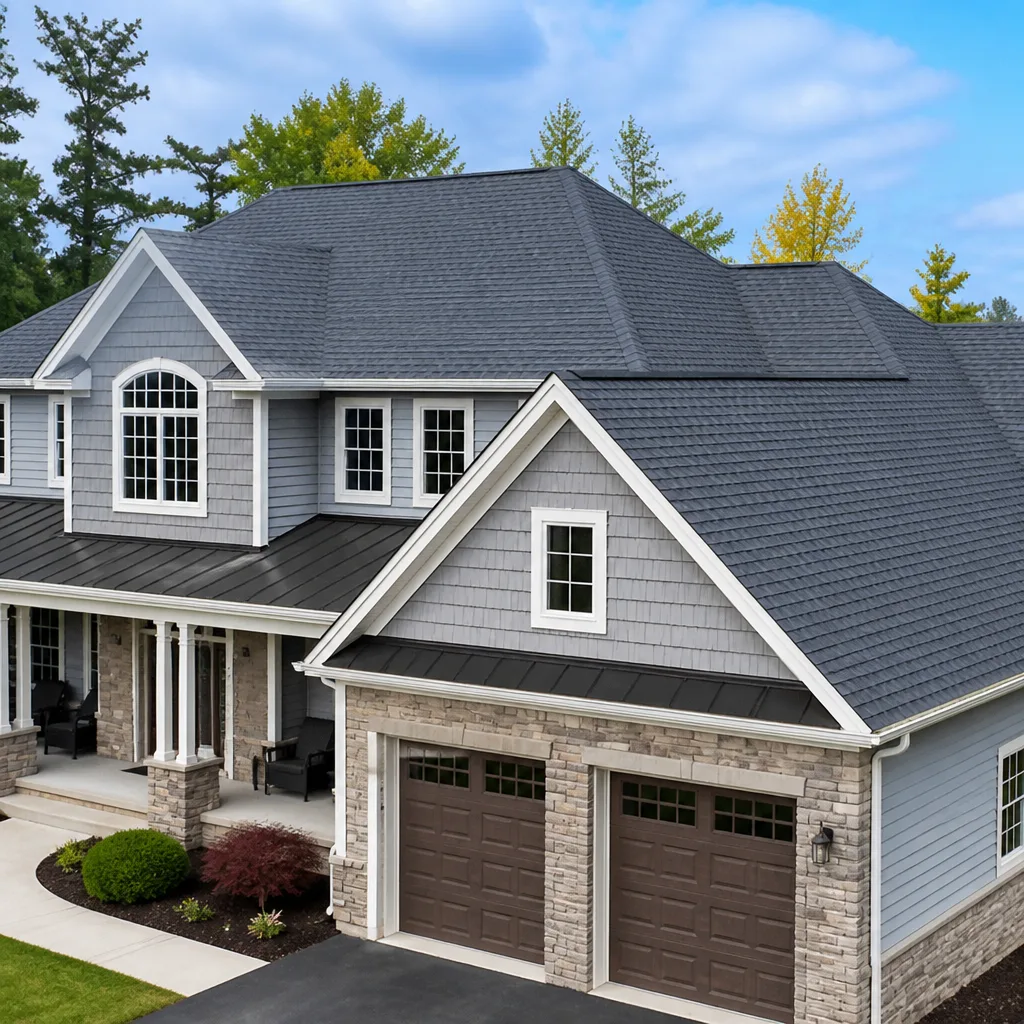
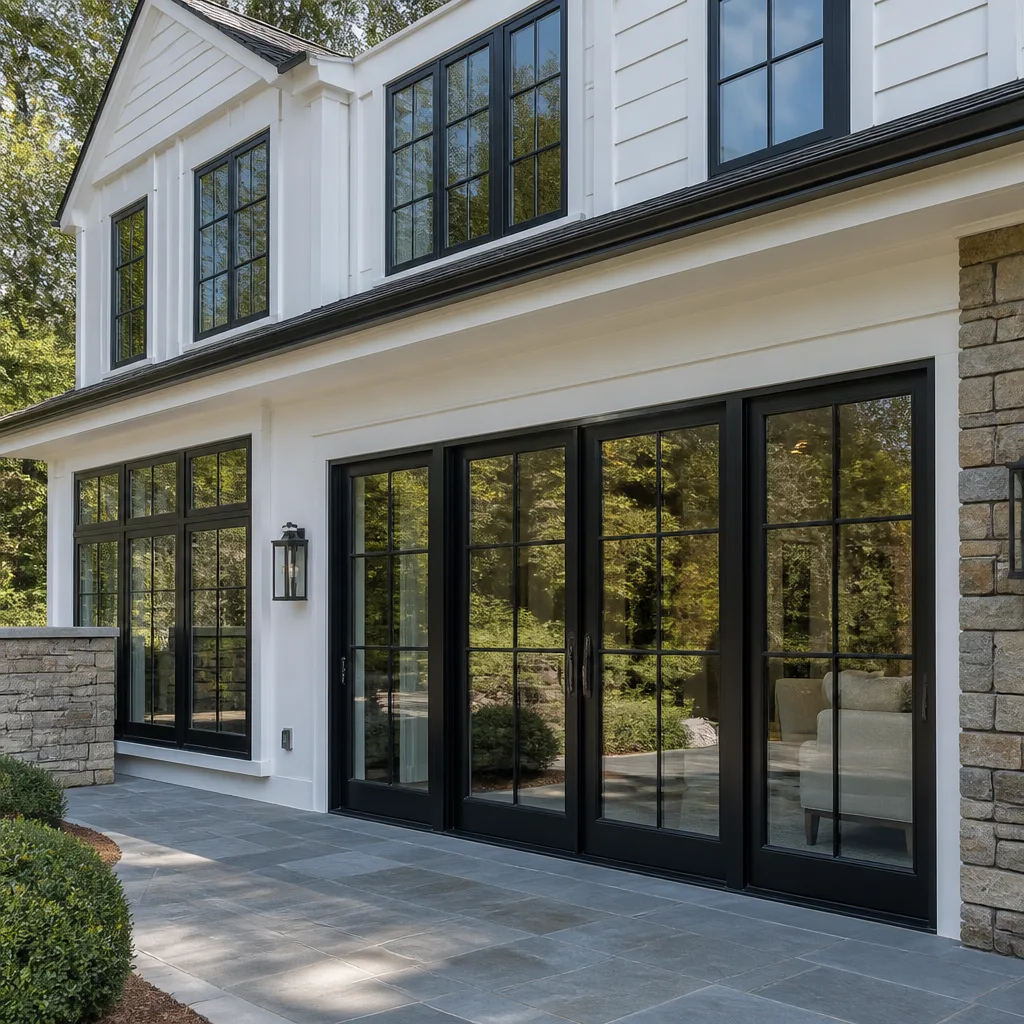
 Before
 After
After Before
 After
After Before
 After
AfterHow Much Does Window Replacement Cost in Los Angeles?
Window replacement in Los Angeles typically costs between $5,310 and $17,700 for a whole-home project, with most single-window replacements running $350 to $900 per window installed. The spread is wide because frame material, glass package, and the condition of the existing rough opening all move the number significantly – a vinyl single-hung in a standard opening costs a fraction of a wood-clad casement with low-E glass and a stucco patch.
Below, Grant Rowan and the team at Rowan Construction Group break down every cost layer so you can bring a screenshot to any contractor conversation and know whether the quote is fair.
Window Replacement Cost Breakdown in Los Angeles (2026)
Window replacement in Los Angeles typically costs between $5,310 and $17,700 for a full home project. The table below shows how that range splits by scope and window type, using current LA-market labor and material rates.
| Scope / Window Type | Typical LA Cost Range | Notes |
|---|---|---|
| Single vinyl window (supply + install) | $350 - $650 per window | Standard single-hung or slider; existing opening in good condition |
| Single fiberglass window (supply + install) | $550 - $950 per window | Better thermal performance; suits craftsman and Spanish Revival homes |
| Single wood-clad window (supply + install) | $800 - $1,600 per window | Common in Historic Preservation Overlay Zones; may require matching profile |
| Aluminum-framed window (supply + install) | $400 - $750 per window | Popular in mid-century and commercial-style homes in Silver Lake, Los Feliz |
| Impact-rated window (supply + install) | $900 - $1,800 per window | Addresses LA building code for wind and seismic glazing zones |
| Whole-home replacement (6 - 12 windows, vinyl) | $5,310 - $9,500 | Standard tract home in the Valley or South Bay |
| Whole-home replacement (6 - 12 windows, fiberglass/wood-clad) | $9,500 - $17,700 | Larger homes, non-standard sizes, stucco or dry-rot remediation included |
| Stucco repair around window (per opening) | $180 - $450 | Common in older Boyle Heights, Koreatown, and Echo Park homes |
| Dry-rot remediation at sill or header (per opening) | $250 - $900 | Coastal microclimates in Venice, Marina del Rey, and Playa del Rey accelerate rot |
| Permit (LADBS, per project) | $150 - $600 | Required when changing opening size or structural header; like-for-like replacement sometimes exempt – verify with LADBS before pulling |
What Pushes the Number Up or Down
The biggest single variable is frame material. Vinyl holds up well in LA’s dry inland heat – think Reseda, Chatsworth, or Sylmar, where summer temperatures regularly crack 100°F in the attic space. Fiberglass expands and contracts less than vinyl across that heat range, which matters if you’re in a home with larger picture windows where even a millimeter of gap translates to air infiltration. Wood-clad frames are often required by the LA Historic Preservation Overlay Zone (HPOZ) rules that govern neighborhoods like Angelino Heights and Carthay Circle; the material premium is real, but so is the permit risk of using vinyl where the city expects wood profiles.
Glass package is the second major driver. A standard dual-pane unit with low-E coating (which reflects radiant heat back out in summer) adds roughly $80 to $150 per window over clear dual-pane. Triple-pane is rarely cost-effective in Los Angeles given the mild winters, but homeowners near the 405 in West LA or the 101 corridor in Studio City often spec it specifically for its acoustic performance rather than its thermal value – and that’s a reasonable use of the budget.
The third variable is the condition of the rough opening. In homes built before 1980 in neighborhoods like Koreatown, Boyle Heights, or West Adams, the window sill and header framing frequently show dry rot, moisture damage, or previous amateur patch work. The crew can’t know what’s behind the stucco until the old window comes out. That’s why a written scope document matters: under Clause 1 of the Haven Standard, the price Rowan puts in writing covers the work visible at the time of quote, and any condition discovered in the wall triggers a signed change order before a single additional dollar is spent – not a verbal explanation after the fact.
What Affects Window Replacement Pricing in Los Angeles
- Frame material: Vinyl is the most affordable and handles LA’s dry heat well. Fiberglass costs more but holds its dimensions across wider temperature swings – relevant in the San Fernando Valley, where attic temperatures can reach 140°F. Wood-clad is the premium tier and may be required in HPOZ neighborhoods. Aluminum frames, common in mid-century homes throughout Silver Lake and Los Feliz, are moderately priced but conduct heat more readily, so spec a thermal break if you’re going this route.
- Window style and size: A standard 3×4 single-hung costs less to supply and install than a 6×5 picture window or a casement that swings outward and requires a heavier hinge mechanism. Bay and bow windows, popular in older Brentwood and Hancock Park homes, involve structural framing and often a permit regardless of whether the opening size changes.
- Glass specification: Dual-pane with low-E coating is the LA baseline – Title 24 energy compliance requires it on replaced fenestration in most project types. Tempered or laminated glass is required within 18 inches of a door or in any window below 18 inches from finished floor. Impact-rated glazing is increasingly specified near the coast and in hillside zones for combined wind and seismic reasons.
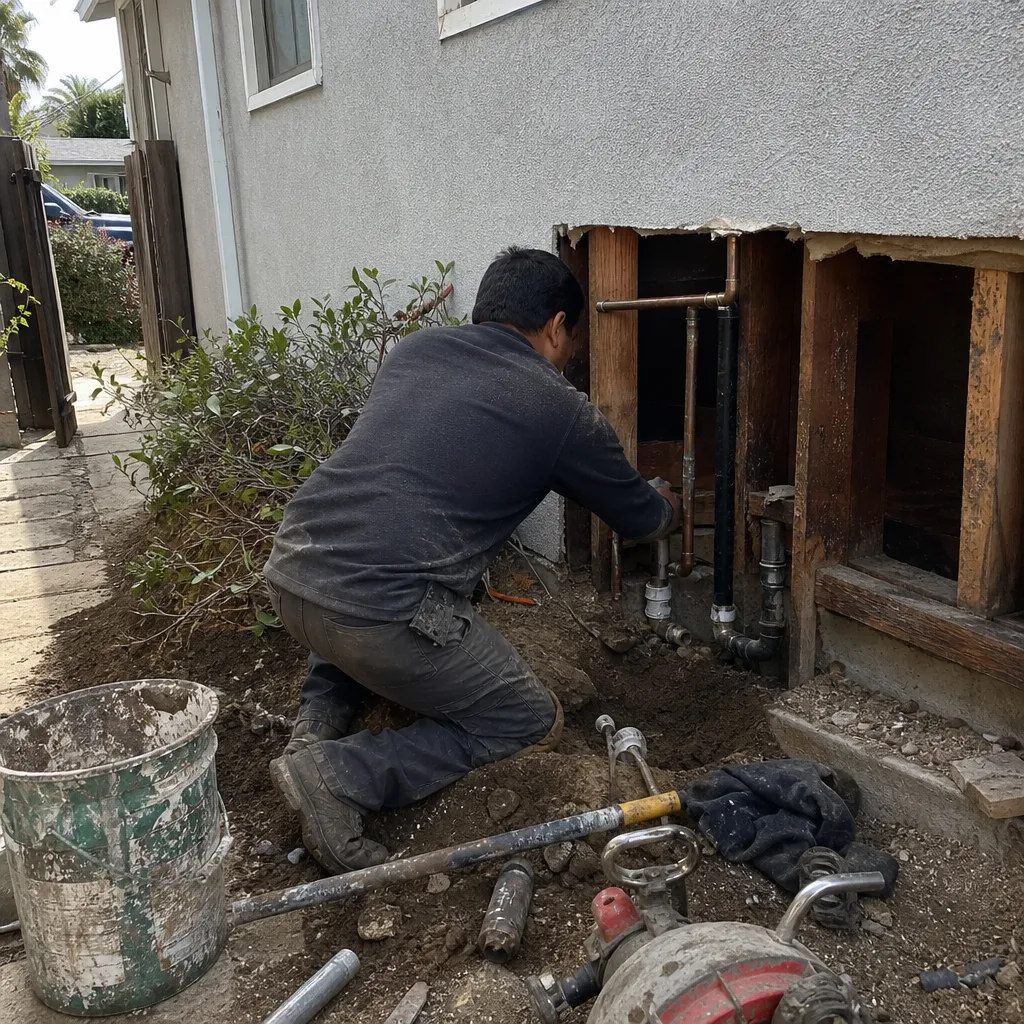
- Existing opening condition: Stucco homes common across the Eastside and mid-city neighborhoods often have moisture accumulation at the sill plate that only becomes visible after the old window is removed. Coastal properties in Venice, Playa del Rey, or Hermosa Beach show this more frequently than inland homes. Remediation – reframing a sill, replacing a header, patching stucco – adds $250 to $900 per opening and should be in your budget contingency.
- Permit requirements: The Los Angeles Department of Building and Safety (LADBS) generally allows like-for-like window replacement without a permit when the opening size doesn’t change and the work isn’t in a fire-rated wall. Enlarging an opening, adding a new window, or working in an HPOZ triggers a permit – currently $150 to $600 depending on project valuation. Any contractor telling you permits aren’t needed for structural header work is worth questioning.
- Labor access and story height: A second-floor window in a hillside home in Silverlake or a rear-elevation window in a narrow lot in Highland Park costs more to install than a ground-floor replacement in a flat-lot Ranch house. Scaffold or lift equipment adds to the labor line, and the crew time roughly doubles when interior access is limited by built-ins or cabinetry.
 Before
 After
AfterWindow Replacement Costs by Neighborhood in Los Angeles
Los Angeles is not one market. Labor rates, material logistics, and the building stock vary enough across the city that the same vinyl slider costs more to install in Bel Air than in Northridge – not because the window is different, but because parking restrictions, HOA approval timelines, and the typical condition of older luxury-home framing all add time to the job.
San Fernando Valley (Reseda, Van Nuys, Chatsworth)
The Valley’s post-war tract housing – mostly single-story Ranch homes on flat lots with aluminum-framed jalousies and sliding windows from the 1960s – is the most straightforward window replacement stock in LA. Standard openings, accessible sills, and flat-lot access keep labor efficient. A full home of 8 to 10 vinyl replacements typically runs $5,500 to $8,500 here. The trade-off is that the summer heat exposure is severe, and low-E coating is worth every dollar in a west-facing Valley home.
Eastside (Boyle Heights, East LA, Lincoln Heights)
Older Spanish and Craftsman bungalows with wood frames from the 1920s to 1940s are common. Stucco exteriors mean every window removal involves stucco repair, and dry rot at the sill is more the rule than the exception. Budget an extra $300 to $600 per opening for substrate work and factor in that some of these homes fall under HPOZ or Mills Act protections that dictate material and profile matching.
Westside (Santa Monica, Venice, Culver City)
Coastal humidity is the defining variable here. Salt-laden air accelerates frame corrosion and sealant breakdown faster than anywhere else in the metro. Aluminum frames that look fine from the street are often corroding at the corner joints. A quality vinyl or fiberglass replacement with a factory-applied silicone seal is the durable choice. Expect higher permit scrutiny in Santa Monica, which has its own building department and sometimes requires separate energy compliance documentation beyond the LADBS standard.
Mid-City and Koreatown
Dense blocks, limited street parking, and a mix of single-family homes and duplexes make logistics a factor. Many homes here were built between 1930 and 1960 with non-standard window sizes that require custom-order units or site-built rough opening modifications. Lead times for custom vinyl or fiberglass units run 3 to 5 weeks from most manufacturers – plan the project timeline accordingly.
Hollywood Hills and Silver Lake (Hillside Homes)
Second-story or higher window access on steep lots frequently requires scaffolding or a lift. Add $400 to $1,200 to the project cost for equipment and the additional crew time. Mid-century homes with steel Crittal-style frames are a specialty job – not every contractor carries the gasket material and cutting tools needed to do these correctly, and a botched installation on a steel frame can compromise the thermal seal permanently.
How to Save on Window Replacement in Los Angeles
The single most effective thing you can do is replace multiple windows in one project. Mobilization costs – crew time, equipment, the permit filing fee – are largely fixed per visit. Replacing six windows costs meaningfully less per unit than replacing two, because the setup cost spreads across more openings. If three or four windows are failing but you know two more will follow within a couple of years, the math usually favors doing all of them now.
Second: get a written quote with a line-item scope, not a per-window ballpark. Vague quotes hide the substrate work. When a contractor prices “windows installed,” ask what happens if there’s rot at the sill. If the answer is a verbal “we’ll deal with it,” that’s a change order waiting to happen. Rowan’s written quotes separate the window cost, the trim and stucco work, and any structural contingency – so you know what each line covers before the crew arrives.
Third: understand the California Energy Commission rebate landscape. ENERGY STAR-certified windows – dual-pane with a U-factor at or below 0.30 and a solar heat gain coefficient below 0.25 for LA’s climate zone – may qualify for utility rebates through LADWP or SoCal Edison depending on the program cycle. The rebates are modest, typically $3 to $8 per square foot of glazing replaced, but on a 10-window project that adds up to a few hundred dollars. Ask your contractor to document the product specs so the paperwork is ready when you file.
Fourth: use the Rowan free second opinion. If you have a written quote from another contractor, bring it in and Grant Rowan’s team will review it line by line at no charge. We’re not looking for a chance to undercut by $50 – we’re looking to tell you whether the scope covers what the job actually requires, because an incomplete scope that produces surprise change orders is the most expensive window job you can buy.
Call (213) 652-7670 for a free, written estimate. The number on the page when you call is the number in the written quote when we leave.
Window Replacement and LA Building Code: What You Need to Know
California’s Title 24 energy code applies to window replacements across Los Angeles. For residential projects in LA’s climate zone (primarily Climate Zone 9 for most of the city, Zone 10 for inland Valley areas), replaced windows must meet minimum performance standards: a maximum U-factor of 0.32 and a maximum solar heat gain coefficient of 0.25. In plain terms, the window has to limit heat transfer in both directions – keeping summer heat out and winter heat in – and almost all current vinyl and fiberglass product lines from manufacturers like Milgard, Andersen, and Pella meet this threshold as a baseline.
The LADBS like-for-like exemption is frequently misunderstood. You don’t need a permit to replace a window with a same-size window in a non-rated wall – but “same size” means the rough opening dimensions stay identical. If the contractor needs to modify the header to fit the new unit, that triggers structural work and a permit. Any window in a one-hour fire-rated wall (common on property-line-adjacent walls in dense neighborhoods) requires a rated glazing assembly and a permit regardless of size.
HPOZ restrictions add another layer. The city maintains 36 Historic Preservation Overlay Zones covering neighborhoods from Angelino Heights to Carthay Circle to the North University Park area. In these zones, window replacement visible from a public right-of-way typically requires a Certificate of Appropriateness from the Office of Historic Resources. The process takes 4 to 8 weeks and requires material and profile documentation. If your home is in an HPOZ and a contractor tells you permits and approvals aren’t needed, that’s a significant red flag.
What the Window Replacement Process Looks Like with Rowan
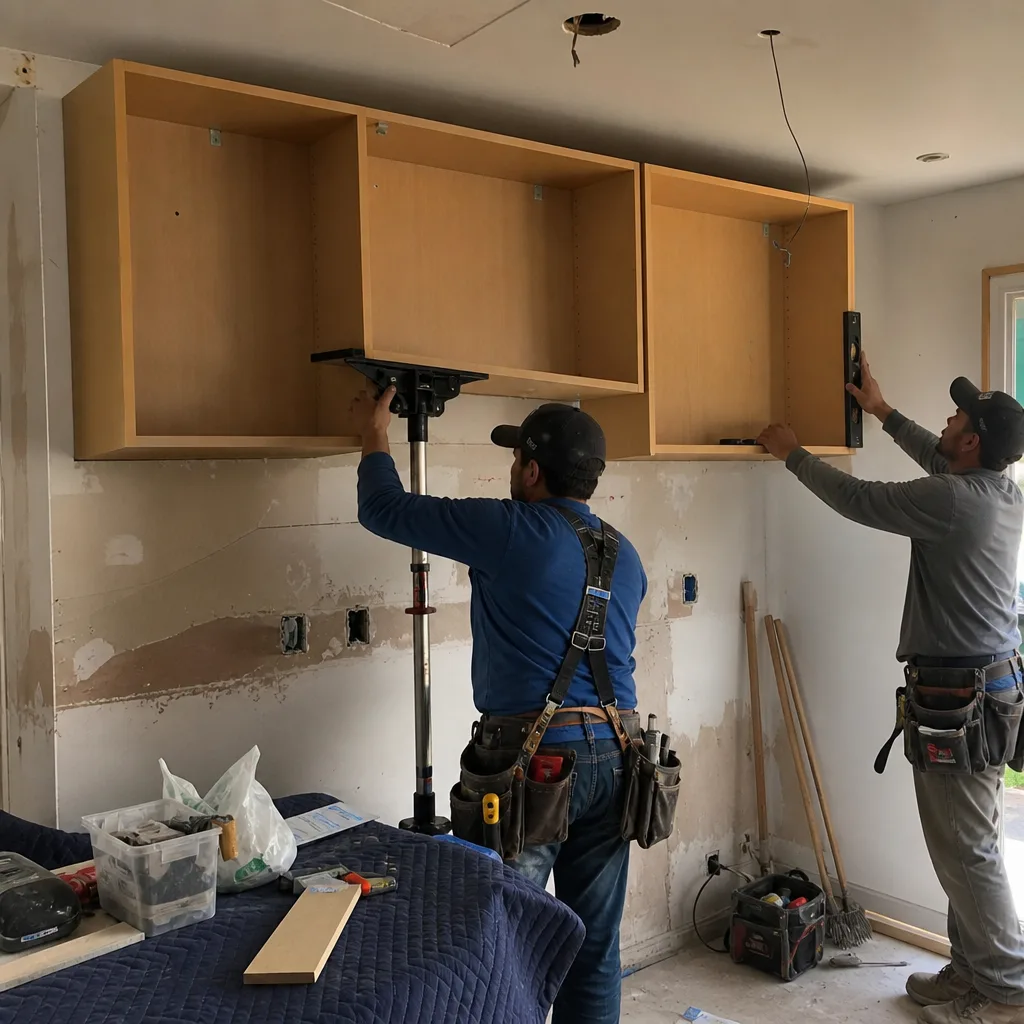
The process starts with a site visit, not a phone estimate. Windows are measured in the field because rough openings in homes built before 1970 rarely match the nominal dimensions on the original plans. The field measurement drives the written quote, which covers supply, installation, trim work, and stucco patching – separately line-itemed so you know exactly what each number represents.
Once you accept the written quote, we file any required permits with LADBS before ordering material. Product lead times vary: stock vinyl sizes from Milgard’s Tuscany or Style Line series typically ship in 1 to 2 weeks; custom sizes or wood-clad units from Andersen’s 400 Series run 3 to 5 weeks. We don’t schedule the installation crew until the windows are confirmed inbound – because rescheduling around a late delivery wastes your time and ours.
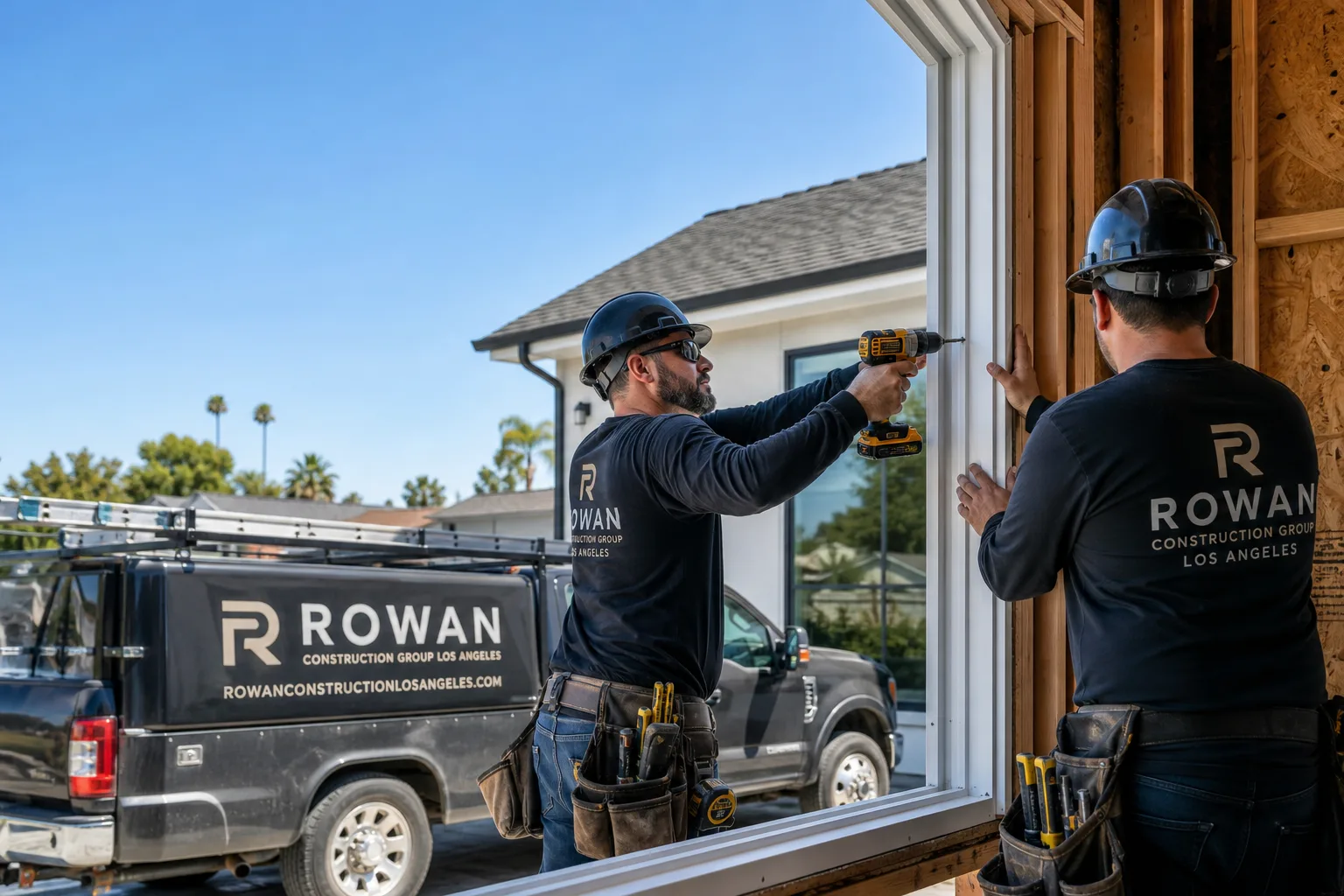
On installation day, the crew arrives uniformed and background-checked, and they document the condition of each opening with photos before the old window comes out. If the substrate shows rot or damage that wasn’t visible at the quoting stage, the crew stops, calls the project manager, and you get a written change order with a dollar amount before any additional work begins. That’s the Haven Standard in practice, not in a brochure.
At the end of the job, you receive a documented photo record of every opening – before, during, and after – along with product spec sheets, any permit final inspection documentation, and the written warranty terms. The 365-Day Done Right Promise covers the installation: if something isn’t right within the first year, Rowan makes it right. That commitment is in writing on every project, not a verbal assurance.
For a full overview of our window and door services, visit our Window Replacement in Los Angeles page, or head back to the home page to see the full scope of trades Rowan covers across the metro.
FAQs: Window Replacement Cost in Los Angeles
How much does window replacement cost per window in Los Angeles?
Most window replacements in Los Angeles run $350 to $950 per window installed, depending on frame material and glass package. A standard vinyl single-hung in a clean opening with no substrate damage falls at the lower end; a fiberglass casement with low-E dual-pane glass and a stucco patch runs closer to $700 to $950. Impact-rated units near the coast can reach $1,800 per window. Call (213) 652-7670 for a written per-window price based on your actual home – estimates are free and the number doesn’t change between the phone and the paperwork.
Is a permit required for window replacement in Los Angeles?
Like-for-like window replacement in a non-rated wall without changing the rough opening size generally does not require an LADBS permit. However, any structural header modification, any window in a fire-rated wall, and any visible change in an HPOZ neighborhood does require a permit and sometimes a Certificate of Appropriateness. The permit fee runs $150 to $600. Rowan handles the permit filing on every project that requires one – it’s included in the written scope, not billed as a surprise line item after the fact.
How long does window replacement take in Los Angeles?
A standard 6 to 10-window replacement typically takes one to two installation days once materials arrive. The longer variable is lead time: stock vinyl windows ship in 1 to 2 weeks; custom-size or wood-clad units can run 3 to 5 weeks from order to delivery. HPOZ approvals add 4 to 8 weeks to that timeline. We schedule the installation day only after materials are confirmed inbound, so the crew shows up ready to finish – not waiting on a delayed shipment.
Is it cheaper to repair or replace windows in Los Angeles?
Repair is cheaper per event, but replacement is usually the better dollar-for-dollar decision once a window is past 20 to 25 years old. Reglazing a failed dual-pane seal costs $150 to $300 per unit, but if the frame is warped, the weatherstripping is gone, and the hardware no longer latches, you’re putting $250 into a unit that will need full replacement within two to three years anyway. Grant Rowan’s team will tell you honestly during the site visit which windows are worth repairing and which aren’t – because overselling replacements on windows that could be repaired damages a working relationship faster than anything else.
What is the most cost-effective window material for Los Angeles homes?
For most LA homes, vinyl is the most cost-effective frame material – it handles the heat, meets Title 24 requirements, requires almost no maintenance, and costs $350 to $650 per window installed. Fiberglass is worth the step-up cost in the San Fernando Valley (where temperature swings are larger) and for larger picture windows where dimensional stability matters more. Wood-clad is the right answer only when the HPOZ or your own preference requires it – it performs well but costs more and requires periodic painting or sealing. Aluminum without a thermal break is rarely the right choice for a new installation in LA’s climate, though it’s still appropriate for some mid-century restorations in Silver Lake and Los Feliz.
Does Rowan Construction Group offer financing for window replacement in Los Angeles?
Rowan provides a written flat-price quote before any work starts, and we’re transparent about every line item so you can plan around the real number. For financing options, we recommend speaking with your bank or credit union about a home improvement loan or HELOC – and we’re happy to provide the written quote and scope documentation those applications typically require. What we don’t do is bundle financing into a quote in a way that obscures the actual cost of the work.
Key Takeaways
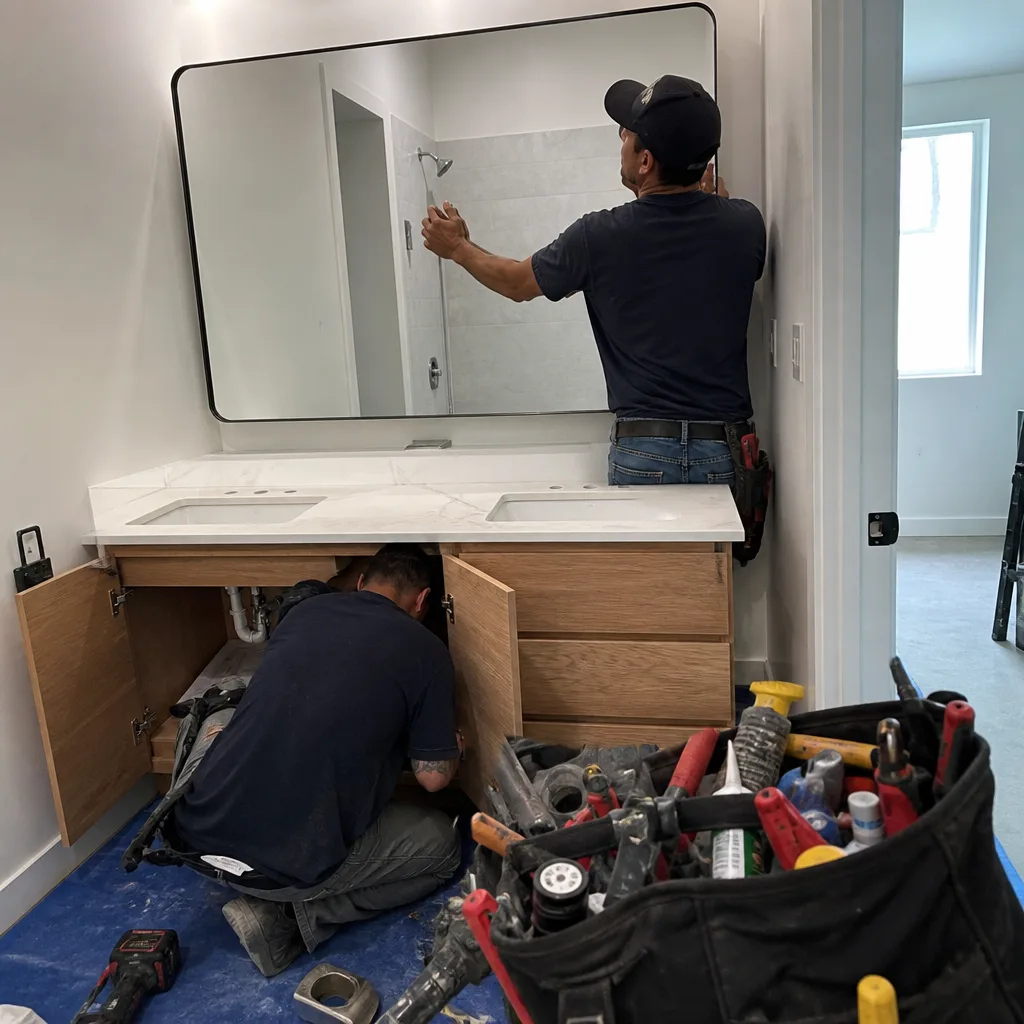
- Window replacement in Los Angeles costs $5,310 to $17,700 for a full-home project and $350 to $950 per window for individual replacements.
- Frame material (vinyl vs. fiberglass vs. wood-clad), glass specification, and opening condition are the three biggest cost drivers.
- Coastal neighborhoods like Venice and Marina del Rey see higher rates of dry rot and frame corrosion – budget a contingency per opening.
- HPOZ neighborhoods require material and profile matching and often a Certificate of Appropriateness before work begins.
- Title 24 energy compliance applies to replacements; most current vinyl and fiberglass products meet the standard as shipped.
- Like-for-like replacements without structural changes generally don’t require an LADBS permit – but verify before you assume.
- Replacing multiple windows in one project is the most reliable way to reduce the per-unit cost.
- A written scope with line-item pricing protects you from change-order surprises – Rowan provides this on every project before work starts, backed by the Haven Standard.
Get a Written Window Replacement Estimate in Los Angeles
Rowan Construction Group has delivered written, flat-price project quotes since 2007 – more than 4,000 projects across seven trades, every one priced before anyone picked up a tool. Grant Rowan and the team serve homeowners across Los Angeles, from the San Fernando Valley to the Eastside to the Westside, with the same process on every job: measure the actual opening, write the actual price, pull the permit if the job needs one, document every phase, and fix anything that isn’t right for a full year after we leave.
If you have a competitor’s written estimate, bring it. Rowan offers a free second opinion on any written quote – reviewed line by line, no charge, no obligation. The goal is to make sure the scope covers the actual job before anyone commits to a number.
Call (213) 652-7670 to schedule a free, on-site window replacement estimate in Los Angeles. A live person answers – not a form, not a callback queue.
Written by Grant Rowan, Owner at Rowan Construction Group Los Angeles, serving Los Angeles since 2007.
Pricing reflects the Los Angeles market as of 2026. Rowan Construction Group Los Angeles offers free estimates – call (213) 652-7670.
What Our Customers Say
"Solid work, decent crew, and the site was left tidy every evening."
- Pearl A."Final invoice was within two percent of the contract. Every change was priced and signed before anyone picked up a tool."
- Malcolm T."Good communication throughout. Weekly written update meant I never had to chase them."
- Nadine G.