
Free written scope consultation - allowances, timeline, and change-order rules on paper before a single trade is scheduled
 Before
 After
After Before
 After
After Before
 After
AfterHow Much Does Vinyl Fence Installation Cost in Los Angeles?
Vinyl fence installation in Los Angeles typically costs between $4,130 and $10,620 for a standard residential project, with most homeowners landing somewhere in the $5,500 to $7,500 range depending on linear footage, fence height, and the style they choose. Labor in Los Angeles runs higher than the national average, and permit requirements in some neighborhoods add a few hundred dollars to the total. Most installations are completed in one to two days once materials are on site.
Vinyl Fence Installation Cost Breakdown (2026)
Vinyl fence installation in Los Angeles typically costs between $4,130 and $10,620 for a standard residential project, with most homeowners landing somewhere in the $5,500-$7,500 range depending on linear footage, fence height, and the style they choose. Labor in Los Angeles runs higher than the national average, and permit requirements in some neighborhoods add a few hundred dollars to the total. Most installations are completed in one to two days once materials are on site.
Here is how those numbers break out by line item for a typical Los Angeles project:
| Cost Component | Typical Range (Los Angeles, 2026) | Notes |
|---|---|---|
| Vinyl materials (panels, posts, rails) | $18-$40 per linear foot | Privacy panels cost more than picket or semi-privacy |
| Labor | $12-$22 per linear foot | Higher in West LA, Bel Air, and hillside neighborhoods |
| Concrete for post footings | $3-$6 per linear foot | Deeper footings required on sloped lots |
| Gates (single) | $250-$600 each | Double gates add $450-$900 |
| Old fence removal and disposal | $300-$900 total | Wood fences typically cost more to haul than chain-link |
| Permit (where required) | $150-$450 | Required in many LA neighborhoods for fences over 42 inches |
| Full project (150-200 linear feet) | $4,130-$10,620 | The realistic range for a typical LA backyard perimeter |
The widest swings in final cost come from two places: the fence style and the lot. A basic 4-foot picket fence on a flat Culver City lot will land near the bottom of that range. A 6-foot full-privacy fence on a sloped Silver Lake or Eagle Rock property, with a double gate and old wood fence removal, will push toward the top. The labor differential between a straightforward installation in the Valley and a hillside job in Mount Washington can be $5-$8 per linear foot on its own, because crews spend more time on layout, require longer post depths, and often work slower on uneven terrain.
Material grade matters more than most homeowners expect. Contractor-grade vinyl costs less per panel but uses thinner walls – typically 0.100 inch – that can crack in sustained heat or shift slightly over years of California sun. Premium vinyl, which most reputable Los Angeles fence contractors use, runs 0.130 to 0.180 inch wall thickness and carries a longer fade and crack warranty from the manufacturer. At Rowan Construction Group, every written quote specifies the material brand and wall thickness before anyone picks up a post-hole digger, so you know what you’re getting before you sign.
What Affects Vinyl Fence Installation Pricing in Los Angeles
- Linear footage and fence height: This is the most straightforward driver. A 150-foot, 6-foot-tall privacy fence uses more material and takes longer to install than 100 feet of 4-foot picket. In Los Angeles, most backyard privacy fences run 150 to 220 linear feet. Every additional foot of height adds roughly $4-$8 in material cost per linear foot.
- Lot slope and soil conditions: Flat lots in areas like Palms or Northridge are straightforward. Hillside properties in Glassell Park, Silverlake, or the canyons above Brentwood require longer posts, deeper concrete footings, and a stepped or racked fence design to follow the grade. That complexity adds time and materials – typically 20 to 35 percent on labor alone.
- Fence style: Full-privacy panels (no gaps) cost the most because they use the most vinyl. Semi-privacy and shadowbox styles run 10 to 15 percent less. Picket fences are the most affordable style per linear foot. Decorative post caps and routed panels add $1-$4 per linear foot in material cost but are worth pricing if curb appeal matters for a front yard in a neighborhood like Los Feliz or Hancock Park.
- Permit requirements: The City of Los Angeles requires a permit for fences exceeding 42 inches in height in the front yard and in many side and rear situations where the property abuts a right-of-way. Some homeowners in HOA communities in areas like Porter Ranch or Northridge face additional design review. Permits typically add $150 to $450 to a project, plus a few days of lead time. A contractor who skips the permit question isn’t saving you money – they’re leaving the liability with you.
- Gate count and hardware: Each gate is a separate cost center. A single walk-through gate in vinyl with basic latch hardware runs $250-$600 installed. A double-wide drive gate adds $450-$900. Upgraded hardware – self-closing hinges, keyed locks, or a heavy-duty latch – adds $60-$180 per gate. Hillside properties in neighborhoods like Mount Washington sometimes require custom gate sizing because the standard panel widths don’t fit sloped openings cleanly.
- Existing fence removal: If there’s an old wood fence to pull out, plan on $300-$900 for removal and disposal depending on the fence type and linear footage. Chain-link comes out faster and usually costs less to haul. Old redwood or cedar privacy fencing, especially if it’s been in place for decades and the posts are set deep, takes more time. Some Los Angeles homeowners in older neighborhoods like Highland Park or Boyle Heights encounter posts set in unusually deep concrete, which adds time and cost.
 Before
 After
AfterVinyl vs. Other Fence Materials in Los Angeles: A Quick Comparison
Vinyl isn’t always the right answer, and we say that as a contractor who installs it regularly. Here’s where it fits versus the alternatives most Los Angeles homeowners consider:
- Vinyl fence installation: $4,130-$10,620. Low maintenance, no painting or staining, and it holds up well in the dry heat of the Valley and the marine air near the coast. The material doesn’t rot, warp, or splinter. The main trade-off is that vinyl can look more suburban than the natural grain of wood, which matters in neighborhoods where the aesthetic runs toward a specific character.
- Aluminum fence installation: $4,720-$11,800. Better for decorative front yard applications or pool enclosures. Aluminum won’t rust, which matters in coastal areas like Mar Vista or Playa del Rey where salt air accelerates corrosion on iron. It’s not a privacy fence option – aluminum is typically open-picket – but it’s the cleaner-looking choice for street-facing installations.
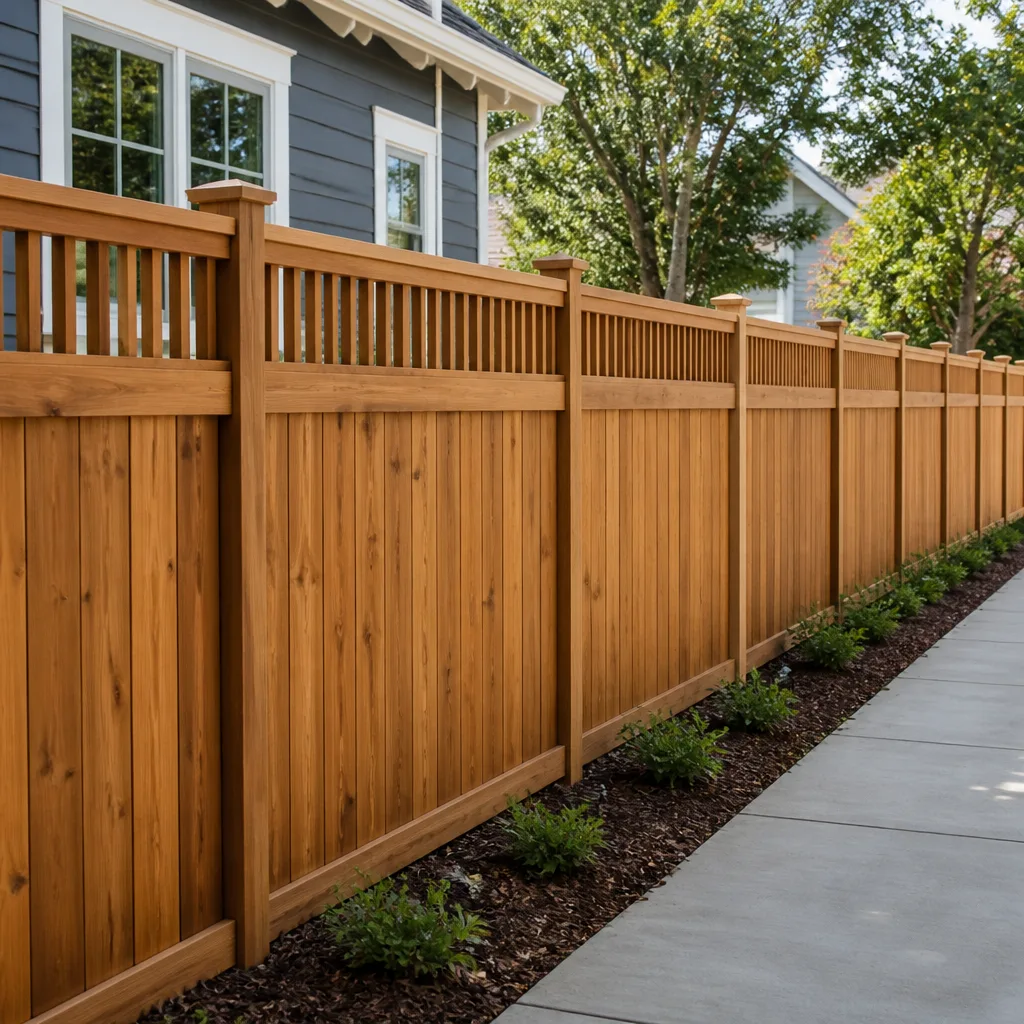
- Wood fence: $3,500-$9,000 estimated range. Still the most popular choice in older LA neighborhoods because it matches bungalow and craftsman architecture. The downside is maintenance: wood in Los Angeles needs staining or sealing every two to four years, and termite pressure in parts of the San Fernando Valley and East LA is real. Vinyl has no termite exposure and requires nothing beyond an occasional rinse.
For homeowners primarily motivated by low maintenance over a 10-to-15-year horizon, vinyl is usually the better value even at a slightly higher upfront cost than wood. For front yard applications where appearance is the priority, aluminum is worth pricing. A written quote for both lets you compare on actual numbers rather than estimates.
Los Angeles-Specific Considerations for Vinyl Fence Installation
Installing a fence in Los Angeles isn’t the same as installing one in Phoenix or Dallas, and a few local factors are worth understanding before you get quotes.
Soil and seismic design. Los Angeles sits on ground that moves. That’s not a reason to panic about a fence, but it does mean post depth and concrete footing size matter more here than in stable-soil markets. A fence post set in 12 inches of concrete in Ohio might last 20 years. In LA, particularly in hillside neighborhoods or areas with expansive clay soils like parts of Granada Hills or Sunland, a properly engineered footing means 18 to 24 inches of depth and the right concrete mix ratio. Shortcuts here are how posts start leaning in three to five years.
HOA restrictions. Planned communities throughout Los Angeles, from Porter Ranch in the northwest to Valencia and communities in the South Bay, often specify fence heights, colors, and styles. White vinyl may be required. Or it may be prohibited in favor of a specific tan or gray. Getting your HOA’s written approval before ordering materials is the step that prevents a finished fence from being forced down. Rowan’s quoting process flags HOA requirements at the estimate stage.
Property line disputes. Los Angeles has a dense mix of older lots where survey markers are long gone and neighbors have informally agreed to where the line is for decades. A vinyl fence is a permanent structure. Before installation, confirm your property line with a survey or at minimum your most recent title report. The cost of a survey ($500-$1,200) is modest compared to relocating a 200-foot fence two feet over.
California wind loads. The Santa Ana winds hit parts of the San Fernando Valley, the Inland Empire edge, and hillside communities hard every fall. Wind load is a design factor for fence panels and posts. A 6-foot solid privacy fence presents a significant wind surface, and posts that aren’t set deep enough or spaced appropriately can fail in a sustained Santa Ana event. This is one of the reasons we don’t compress post spacing or skimp on footing depth to lower material cost.
How to Save on Vinyl Fence Installation in Los Angeles
There are real ways to reduce cost on a vinyl fence project in Los Angeles, and there are ways that look like savings but create problems later. Here’s the difference.
Get a written itemized quote before you commit to anything. A line-item quote lets you see exactly what’s driving cost. If the quote is a single number with a vague scope, you have no way to know which line items are padded and which are not. Under Clause 1 of the Haven Standard, Rowan delivers a flat written price with a written scope before any work starts. Call (213) 652-7670 for a free estimate and you’ll have a document to compare against, not a verbal ballpark.
Bring us a competitor’s written quote and we’ll review it line by line. This is a standing offer – the Free Second Opinion on any written estimate. If a competitor has quoted your project, we’ll go through it with you at no charge. Sometimes we find that a competitor is charging market rate and the quote is fair. Sometimes we find that the materials specified are undersized or the footing depth is insufficient for your lot. Either way, you leave with more information than you came in with.
Handle simple prep work yourself. If you can remove gates and gate hardware, clear the fence line of vegetation, and mark sprinkler heads before the crew arrives, you’ll reduce the time they spend on non-installation tasks. This rarely saves more than a few hundred dollars, but it’s real money for minimal effort.
Do the full perimeter at once rather than in phases. It’s tempting to do the back fence now and the side fence later, but splitting the project into two mobilizations costs you more in total. Crews charge for setup, layout, and disposal on each visit. A single full-perimeter job almost always costs less per linear foot than two separate partial jobs.
Ask specifically about gate placement. If you need a gate for backyard access, the location matters for cost. A gate placed at a point where the fence terminates at the house wall costs less than a gate centered in a long fence run, because the latter requires structural posts on both sides rather than using the existing termination point. It’s a small design choice that can save $150-$300.
Time the project after permit processing. Los Angeles permit processing times vary. Some projects get over-the-counter approval in a day; others sit in the queue for two to three weeks. If you’re flexible on start date, scheduling the installation for after permit approval rather than paying for a crew to stand by can reduce soft costs.
FAQs: Vinyl Fence Installation Cost in Los Angeles
How much does vinyl fence installation cost in Los Angeles per linear foot?
Vinyl fence installation in Los Angeles runs $28-$65 per linear foot installed, including materials, labor, and concrete for post footings. Basic picket styles land near the lower end; full-privacy 6-foot panels on sloped lots push toward the higher end. For a full project estimate, call (213) 652-7670 – estimates are free and include a written scope.
Do I need a permit to install a vinyl fence in Los Angeles?
In most cases, yes – the City of Los Angeles requires a building permit for fences that exceed 42 inches in height in the front yard setback, and in many rear and side situations as well. Permit fees typically run $150-$450 depending on the project scope. Some unincorporated LA County areas and separate municipalities like Burbank, Pasadena, or Culver City have their own permit thresholds, which is why the contractor pulling your permit needs to know exactly which jurisdiction your property falls under. Rowan handles permit coordination and includes the permit fee in the written quote so there are no surprises.
How long does vinyl fence installation take in Los Angeles?
Most residential vinyl fence installations in Los Angeles take one to two days for a standard 150-to-200-linear-foot perimeter. Hillside lots in neighborhoods like Eagle Rock or Mount Washington may add a half to full day depending on slope severity and footing requirements. Permit processing – not installation – is usually the longer lead time, sometimes adding one to three weeks before work can begin.
Is vinyl fencing worth the cost compared to wood in Los Angeles?
For most Los Angeles homeowners focused on maintenance cost over a 10-to-15-year period, yes, vinyl is typically worth the price premium over wood. Wood fencing in LA needs staining or sealing every two to four years ($300-$800 per application for a typical perimeter), is vulnerable to termite damage in parts of the Valley and East LA, and will warp over time in the thermal cycling of dry, hot summers. Vinyl requires no painting, no sealing, and has no termite exposure. The upfront cost difference between vinyl and wood in Los Angeles is roughly $500-$1,500 for a typical project – a gap that most homeowners recover in avoided maintenance within five to seven years.
Can Rowan Construction Group give me a firm price before work starts?
Yes – every project receives a flat written price and written scope before any work begins. Under Clause 1 of the Haven Standard, no work starts and no change proceeds without a signed document. That’s not a sales promise – it’s the administrative discipline that has kept Rowan’s projects within a few percent of the agreed cost across more than 4,000 jobs since 2007. Call (213) 652-7670 to schedule a free on-site estimate, and you’ll leave with a number you can screenshot, compare, and rely on.
What vinyl fence brands does Rowan install in Los Angeles?
Rowan sources from more than fifty vetted material brands and specifies the manufacturer and product line in every written quote. For vinyl fencing in the Los Angeles market, we work with brands that meet a minimum 0.130-inch wall thickness standard for durability in the California climate. The specific product is named in the quote – not described generically as “premium vinyl” – so you can look up the specs and the manufacturer’s warranty before you sign anything.
Key Takeaways
- Vinyl fence installation in Los Angeles costs $4,130-$10,620 for a typical residential project, with most homeowners spending $5,500-$7,500.
- Installed cost runs $28-$65 per linear foot, depending on style, height, and lot conditions.
- Los Angeles permits are required for most fences over 42 inches and typically add $150-$450 to project cost.
- Hillside lots in neighborhoods like Silver Lake, Eagle Rock, and Mount Washington add 20-35 percent to labor costs due to slope, footing depth, and stepped panel work.
- Vinyl carries a meaningful maintenance advantage over wood in the Los Angeles climate: no painting, no staining, no termite exposure.
- Every Rowan project includes a flat written price before work starts, a signed change order for any scope changes, and a documented photo record on every visit.
- The 365-Day Done Right Promise and a Free Second Opinion on any competitor’s written estimate are standing offers on every project.
Get a Written Price for Your Los Angeles Vinyl Fence Project
If you’re pricing a vinyl fence in Los Angeles – whether it’s a full backyard perimeter in the Valley, a front yard picket replacement in Hancock Park, or a hillside privacy fence in Silver Lake – the best next step is a written number based on your actual lot and scope. Rowan Construction Group has delivered more than 4,000 projects across the Los Angeles area since 2007, every one with a written price before work started and a documented record when the crew left.
For your Vinyl Fence Installation in Los Angeles, call (213) 652-7670 for a free on-site estimate. You’ll get a flat written price with a written scope – not a ballpark, not a “call for a quote.” If you already have a competitor’s written estimate, bring it and we’ll review it line by line at no charge. There’s no obligation and no pressure to decide on the day of the estimate.
You can also learn more about how Rowan approaches every trade from our home page, including the Haven Standard terms that back every promise we put in writing.
Pricing reflects the Los Angeles market as of 2026. Rowan Construction Group Los Angeles offers free estimates – call (213) 652-7670.
Written by Grant Rowan, Owner at Rowan Construction Group, serving Los Angeles since 2007.
What Our Customers Say
"Solid work, decent crew, and the site was left tidy every evening."
- Pearl A."Final invoice was within two percent of the contract. Every change was priced and signed before anyone picked up a tool."
- Malcolm T."Good communication throughout. Weekly written update meant I never had to chase them."
- Nadine G.