
Free written scope consultation - allowances, timeline, and change-order rules on paper before a single trade is scheduled
 Before
 After
After Before
 After
After Before
 After
AfterCambria Kitchen Remodeling: The Los Angeles Owner’s Guide
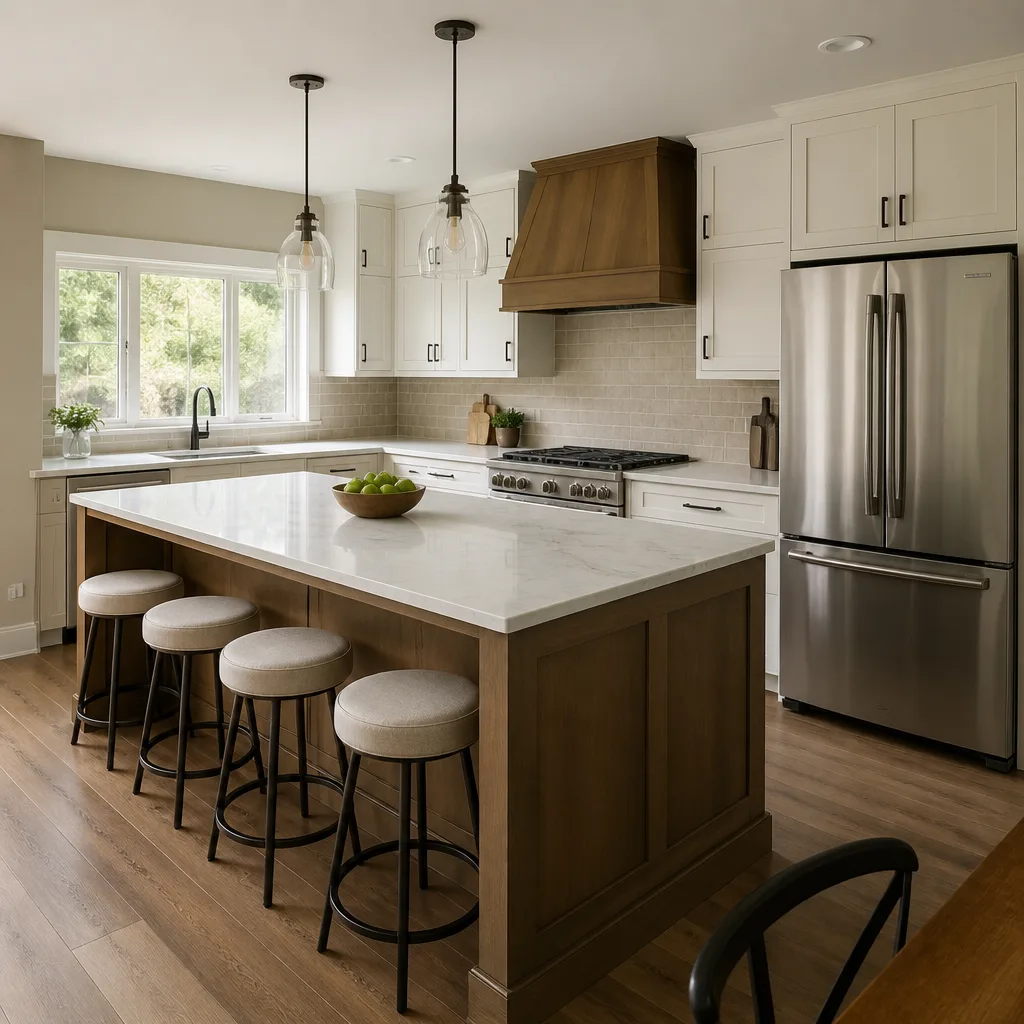
A complete Cambria kitchen remodel in Los Angeles typically runs $16,520-$53,100 installed, with countertop replacement alone ranging $2,360-$7,670 depending on slab grade and edge detail. We stock and install the full Cambria quartz product line, from the Brittanicca and Torquay collections to the newer Matte and High Gloss finishes, and we carry the specialized adhesives, seam kits, and support brackets these slabs require. Most Cambria kitchen projects in Los Angeles neighborhoods like Palms, Mar Vista, and Silver Lake start with a free written estimate that breaks out material, labor, and permit costs line by line.
Homeowners usually discover a Cambria installation problem when a seam opens near the sink cutout, when a countertop overhang starts to sag because the original installer skipped the required support brackets, or when a backsplash gap appears as the house settles through our dry summers and occasional winter rains. These are fixable conditions, but they require matching the original slab grade and understanding how Cambria’s 93% quartz composition behaves differently from natural stone under stress.
Which Cambria Models This Applies To
Cambria organizes its quartz surfaces into design collections rather than model numbers, but the fabrication and installation requirements vary significantly between them. The Marble Collection (Torquay, Brittanicca, Swanbridge) runs 2 centimeters or 3 centimeters thick and requires different edge-build treatments. The Jewel Collection and Desert Collection include some of Cambria’s most color-dense formulations, which can show adhesive shadowing if the installer uses standard white epoxy instead of Cambria’s specified translucent seam adhesive.
To identify what you have, check the underside of an overhang or the sink cutout edge for a printed batch code, or look for a warranty card from the original fabricator. Cambria slabs are stamped with a run number that matters for color matching, because quartz, unlike natural stone, can shift slightly between production batches. If your original installer used a non-Cambria-certified fabricator, you may find they used generic quartz adhesive rather than the methyl-methacrylate formulation Cambria specifies for structural seams.
We source OEM Cambria materials through certified distributors in the Los Angeles basin. For repairs where the original slab grade is discontinued, we match to the closest current production run and document the variance in writing before cutting. We also stock KraftMaid and Wellborn cabinet lines, Silestone alternatives, and Kohler fixtures, so when a Cambria repair turns into a broader kitchen update, the quote covers everything in one scope.
Rowan Construction Group Los Angeles is an independent service provider, not affiliated with Cambria.
Signs Your Cambria Kitchen Remodeling Is Failing
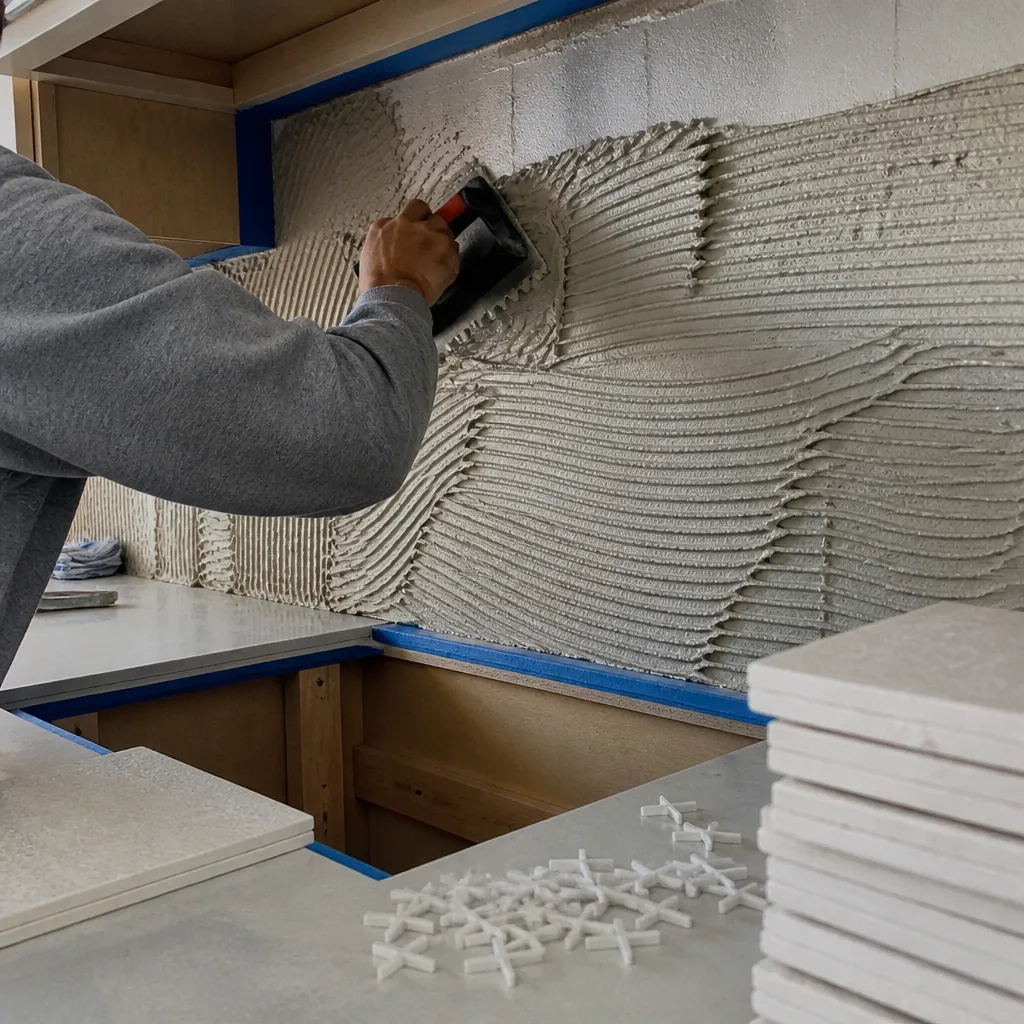
- Visible seam separation at the sink or cooktop cutout. Cambria’s thermal expansion coefficient differs from the plywood substrate beneath it. In Los Angeles kitchens where the original installer skipped expansion joints or used rigid construction adhesive instead of flexible silicone, the slab moves and the seam opens. We see this most often in homes built during the 1980s tract boom in the San Fernando Valley, where kitchen layouts were standardized and installers rushed.
- Sagging or cracking at countertop overhangs beyond 10 inches. Cambria’s 3-centimeter slab can span 10 inches unsupported; beyond that, code and the manufacturer require corbels or steel support brackets. When these are missing, the cantilevered weight creates stress fractures that start at the underside and propagate upward. The fix is bracket installation, not just surface patching.
- Water staining or swelling at the cabinet deck below the countertop. Cambria itself is nonporous, but the seam at the backsplash or sink is not. Failed caulking lets water migrate to the substrate, and by the time the homeowner sees the cabinet damage, the plywood has delaminated. We document this with photos before lifting the slab, because the repair scope includes both the quartz work and the cabinet deck.
- Chipping at inside corners or around undermount sink edges. Cambria is harder than granite, which makes it durable but also brittle at thin sections. Inside corners cut with too small a radius, or sink cutouts with overaggressive grinding, create stress concentrators. The chip propagates from there. Repair requires color-matched epoxy fill for minor damage, or slab replacement if the crack reaches a seam.
- Dull or etched surface in high-use areas. True etching on Cambria is rare, because the resin binder resists acids better than marble. What looks like etching is usually abrasive wear from cleaning with scouring powder, or heat damage from setting a hot pan directly on the surface. The repair is refinishing with Cambria-approved compounds, not the generic polishing kits sold online.
 Before
 After
AfterReplacement Cost & What’s Included
Our Cambria kitchen remodeling prices for Los Angeles follow the ranges below. Every figure is a flat installed price with written scope, not an estimate that shifts later.
| Component | Price Range (Los Angeles) |
|---|---|
| Complete Kitchen Remodel | $16,520 - $53,100 |
| Countertop Installation (Cambria) | $2,360 - $7,670 |
| Cabinet Installation | $4,720 - $15,340 |
| Backsplash Installation | $945 - $2,950 |
| Kitchen Island Installation | $3,540 - $11,800 |
What drives the range: slab grade (Cambria’s designs are priced in tiers), linear footage of countertop, edge detail complexity (standard eased edge vs. ogee or waterfall), and whether the existing cabinets can support the load or need reinforcement. A typical Los Angeles kitchen with 40 square feet of Brittanicca, eased edge, undermount sink cutout, and standard backsplash runs toward the middle of the countertop range.
Every Cambria installation we perform includes: templating with digital or physical methods, fabrication by a Cambria-certified shop, installation with specified adhesives and seam kits, and a 365-Day Done Right Promise backed by The Haven Standard. Under Clause 1, the price is written before anyone starts. No change proceeds without a signed change order. Grant Rowan started this practice in 2007 because he got tired of watching homeowners absorb surprise costs, and “if it’s not written down, it didn’t happen.”
DIY or Call Us?
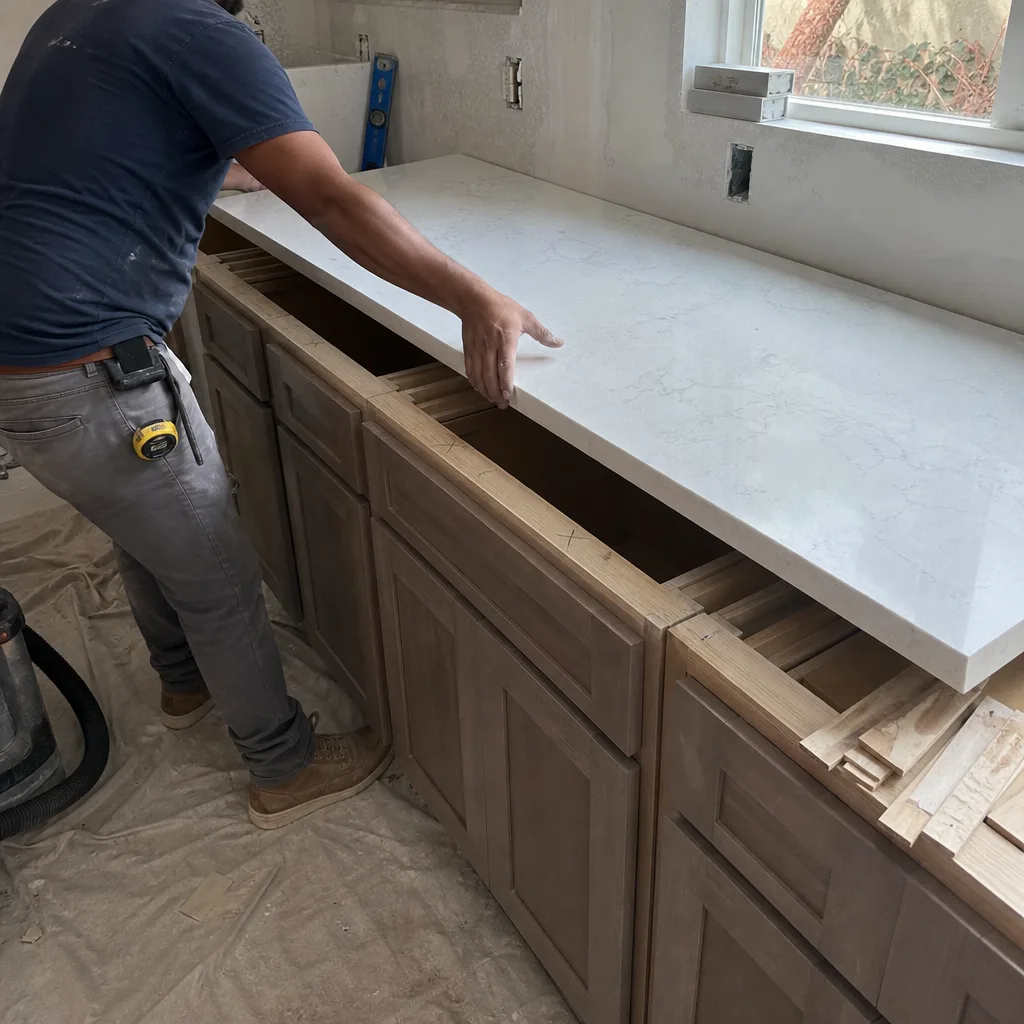
There is one thing a homeowner can safely check: whether the countertop is still firmly bonded to the cabinet deck. Press along the front edge and the sink rim. If you feel movement or hear hollow spots, the adhesive bond is failing. Note the locations with tape and call us. Do not attempt to inject adhesive from below or apply weight to force contact. Cambria slabs weigh 20 pounds per square foot for 3-centimeter material; a standard kitchen section can exceed 400 pounds. The risk of personal injury or slab fracture is real.
Everything else, templating, cutting, seaming, and sink cutout refinement, requires shop equipment and certified fabrication. Cambria voids its warranty if installation is not performed by a certified fabricator, and the specialized tools, vacuum lifters, and seam clamps are not rental items. We bring these on every job, along with the documented photo record that shows you the substrate condition before we cover it.
If you’re seeing any of the symptoms above, call (213) 652-7670 to schedule your free estimate. We’ll inspect, photograph, and deliver a written price before any work starts.
FAQs
With proper installation, a Cambria quartz countertop lasts 25 to 30 years in Los Angeles conditions. The limiting factor is usually not the slab but the seam adhesive or the substrate beneath it, both of which we address during installation with the manufacturer’s specified materials and proper expansion accommodation. Call (213) 652-7670 for an exact quote on your kitchen - estimates are free.
Minor chips and surface dullness can be repaired with color-matched epoxy or factory-approved refinishing compounds. Seam separation and structural cracks require slab replacement, because Cambria cannot be reseamed in place with structural integrity. We assess this during our free estimate and tell you which category your damage falls into. Call (213) 652-7670 to schedule.
Templating takes two to three hours on site. Fabrication runs 10 to 14 business days through our certified Los Angeles shop. Installation is typically one to two days depending on seam count and sink complexity. We schedule templating only after cabinets are level and permanent, because “close enough” is never a unit of measurement. Call (213) 652-7670 to book your templating date.
We maintain relationships with certified Cambria distributors in the Los Angeles basin and pull slabs per job to ensure batch matching and current production runs. We do not stock slabs in a warehouse, where UV exposure and temperature cycling could affect the resin binder. For urgent repairs, we can expedite fabrication to five business days. Call (213) 652-7670 to discuss your timeline.
Written by Grant Rowan, Owner, Rowan Construction Group Los Angeles at Rowan Construction Group Los Angeles, serving Los Angeles and nearby areas.