
Free written scope consultation - allowances, timeline, and change-order rules on paper before a single trade is scheduled
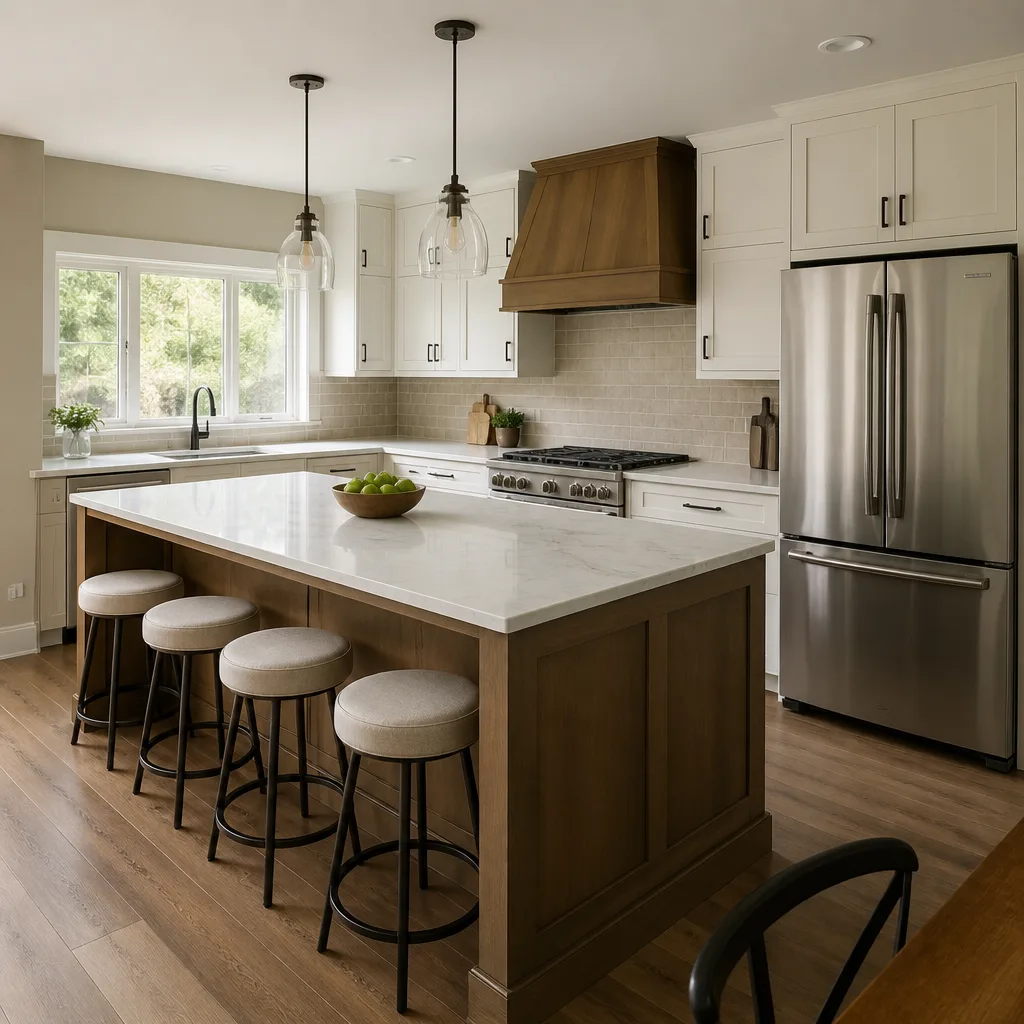
 Before
 After
After Before
 After
After Before
 After
AfterUnilock Bathroom Remodeling: The Los Angeles Owner’s Guide
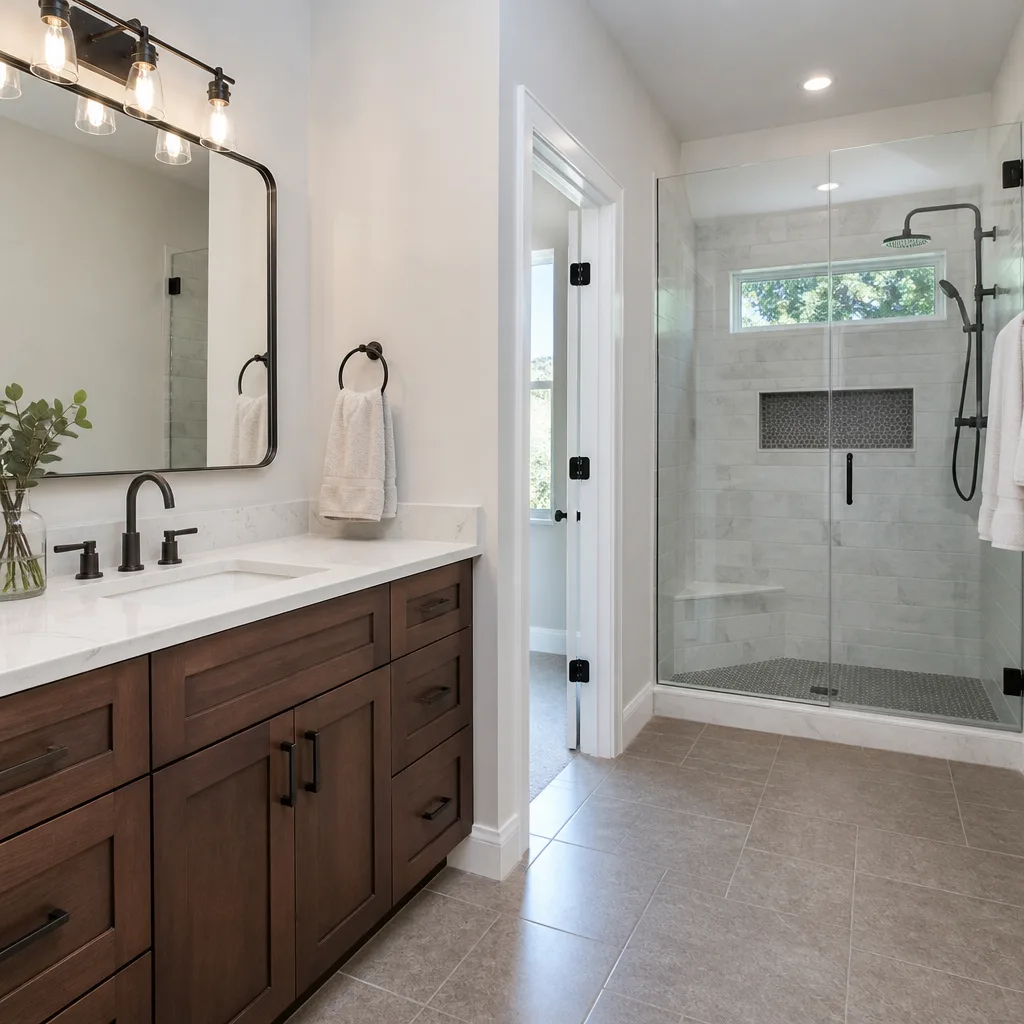
Unilock bathroom remodeling in Los Angeles typically runs $10,620-$33,040 installed, depending on whether we’re refreshing fixtures in a Palms bungalow or reconfiguring a primary bath in a Hancock Park period home. We stock Unilock-compatible systems and can usually begin demolition within one to two weeks of signed approval. Most Los Angeles owners first realize something’s wrong when grout lines start crumbling between the porcelain tiles, or when the linear drain they specified for that open-concept shower begins pooling water where the membrane seam failed.
Which Unilock Models This Applies To
Unilock’s bathroom portfolio breaks into three series that handle moisture differently, and matching the right system to your existing substrate matters more than most contractors admit. The Prima line uses a 3/8-inch porcelain body with through-body color; the Linea series carries a 10mm rectified edge meant for thin-set over concrete board; and the Copthorne paver-style units, sometimes used for shower floors in Venice and Mar Vista renovations, run 2 3/8 inches thick with spacer lugs cast into the bed.
Check the carton label for a 10-digit SKU beginning with “UNI” followed by the series code. If your original installer left no documentation, measure the unit thickness at a broken edge and note whether the color runs through the body or sits as a glazed layer. OEM Unilock is manufactured in Ontario and carries a slightly different absorption rating than the Italian-sourced equivalents some Los Angeles distributors stock; for wet-area applications, we source factory-direct to maintain the 0.5% absorption spec that Unilock certifies for bathroom use. Aftermarket porcelain from comparable mills can perform adequately for dry walls, but we don’t recommend substituting on shower floors or steam-room enclosures where the freeze-thaw margin is already tight.
Signs Your Unilock Bathroom Remodeling Is Failing
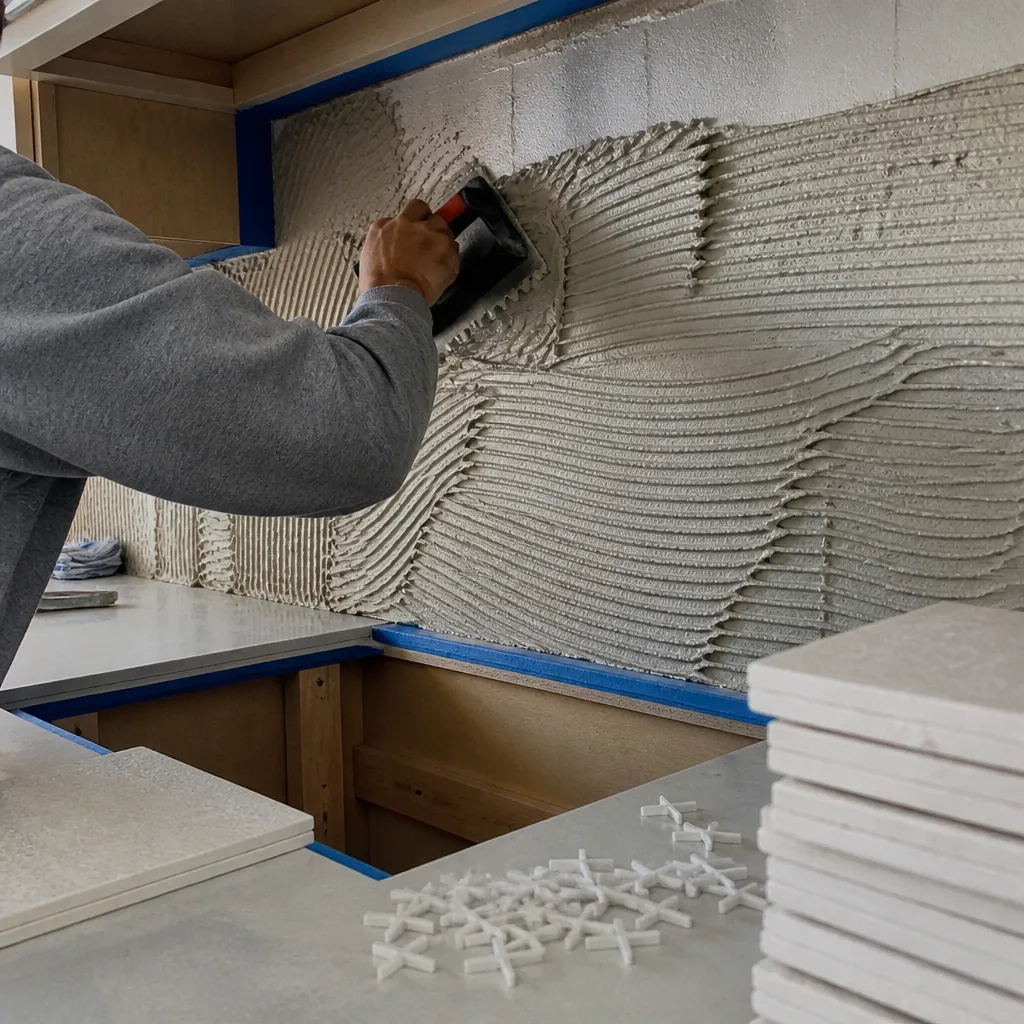
- Grout turning powdery or falling out in chunks. This usually means the original installer used a standard sanded grout instead of Unilock’s specified epoxy or urethane formulation, or the substrate shifted in our clay-heavy Los Angeles soil and cracked the joint. The grout is doing what it should by failing before the tile does, but water is now reaching the membrane.
- Tile sounding hollow when tapped. A hollow ring indicates thin-set failure, often from a plywood subfloor that wasn’t stiffened to L/360 deflection before tile went down. In older Los Angeles homes with 2×8 joists at 24 inches on center, this is almost predictable without added underlayment.
- Water pooling at the linear drain or threshold. The membrane seam at the drain flange is the most common leak point we find; Unilock’s recommended clamping-ring drain needs a two-stage seal that many installers skip. Once the primary seal fails, water tracks along the pan slope and surfaces at the lowest point.
- Efflorescence blooming on grout joints or tile faces. White mineral deposits mean moisture is moving through the assembly and evaporating at the surface. In Los Angeles, this accelerates where hard water meets a compromised vapor barrier, particularly in homes east of La Cienega with higher mineral content.
- Tile edges chipping or spalling at cuts. Unilock’s rectified edge is precise but brittle; a wet saw with a worn blade or a grinder used dry leaves microfractures that propagate under thermal cycling. We see this most on south-facing bathrooms in Silver Lake and Los Feliz where afternoon sun hits tile directly.
 Before
 After
AfterReplacement Cost & What’s Included
Bathroom remodeling with Unilock materials in Los Angeles falls between $10,620 and $33,040, with most projects we quote landing in the $14,000-$22,000 range for a full gut of a 5×8 hall bath. Small bathroom refreshes start around $5,900, while walk-in shower conversions with Unilock porcelain systems run $5,310-$14,160. The spread depends on three things: whether we’re working over a concrete slab or a wood-framed floor requiring reinforcement, whether the drain location moves (which triggers Los Angeles Department of Building and Safety plumbing inspection), and whether asbestos-containing mastic is present in pre-1980 homes, which we test for before demolition begins.
Every quote is a flat written price with line-item breakdown: demolition and haul-away, substrate preparation per TCA Handbook methods, Unilock materials sourced through our distributor in Vernon, thin-set and membrane specified to Unilock’s installation guidelines, and grout with a 25-year residential warranty. Under Clause 1 of the Haven Standard, that price is fixed; if we find rot in the subfloor during demolition, we document it with photos, write a change order with the exact additional cost, and no work proceeds until you sign. Our 365-Day Done Right Promise covers the installation; Unilock’s own material warranty runs 25 years for residential use when installed to their published spec.
DIY or Call Us?
There’s a short list of checks any homeowner can make safely. Verify the SKU on spare cartons if you have them. Photograph the failing area from multiple angles, including the subfloor access if you have a crawl space. Run water deliberately and note exactly where pooling starts, how long it persists, and whether the dampness tracks beyond the wet area.
What we don’t recommend: cutting into a bonded membrane to “see what’s underneath,” grinding old tile without HEPA containment and lead-asbestos testing, or attempting to reset a linear drain flange without understanding the two-stage waterproofing detail. The membrane systems Unilock specifies for wet areas are unforgiving; one puncture in the primary layer and you’re rebuilding the entire shower pan. We’ve been called to six Los Angeles jobs in the past two years where a confident homeowner got three-quarters through demolition before realizing the drain rough-in didn’t match the replacement fixture. If it’s not written down, it didn’t happen, and most DIYers don’t write down the existing conditions before they start removing them.
For a documented assessment with photos, a written scope, and a flat price before any work starts, call (213) 652-7670.
FAQs
A properly installed Unilock wet-area system should perform 20-30 years in Los Angeles, though hard water and coastal salt air can shorten grout life to 10-15 years if not sealed on a two-year cycle. Call (213) 652-7670 and we’ll assess your specific conditions during a free estimate.
Localized repair is possible if the failure is limited to grout or a few cracked tiles and the membrane below tests intact, but matching discontinued Unilock colors can be difficult; we maintain a sample archive from past Los Angeles jobs to improve odds. Call (213) 652-7670 to schedule an evaluation.
Most 5×8 bathrooms we complete in 10-14 working days once materials arrive; custom-ordered Unilock runs can add 2-3 weeks to the front end. The schedule includes Los Angeles permit processing if plumbing moves, which we handle as part of our flat price. Call (213) 652-7670 for a timeline specific to your project.
We stock common Unilock grout colors, membranes, and drainage components in our Los Angeles warehouse; tile itself is project-ordered to ensure batch consistency and avoid the shade variation that occurs between production runs. Call (213) 652-7670 to confirm availability for your SKU.
Written by Grant Rowan, Owner, Rowan Construction Group Los Angeles at Rowan Construction Group Los Angeles, serving Los Angeles and nearby areas.