
Free written scope consultation - allowances, timeline, and change-order rules on paper before a single trade is scheduled
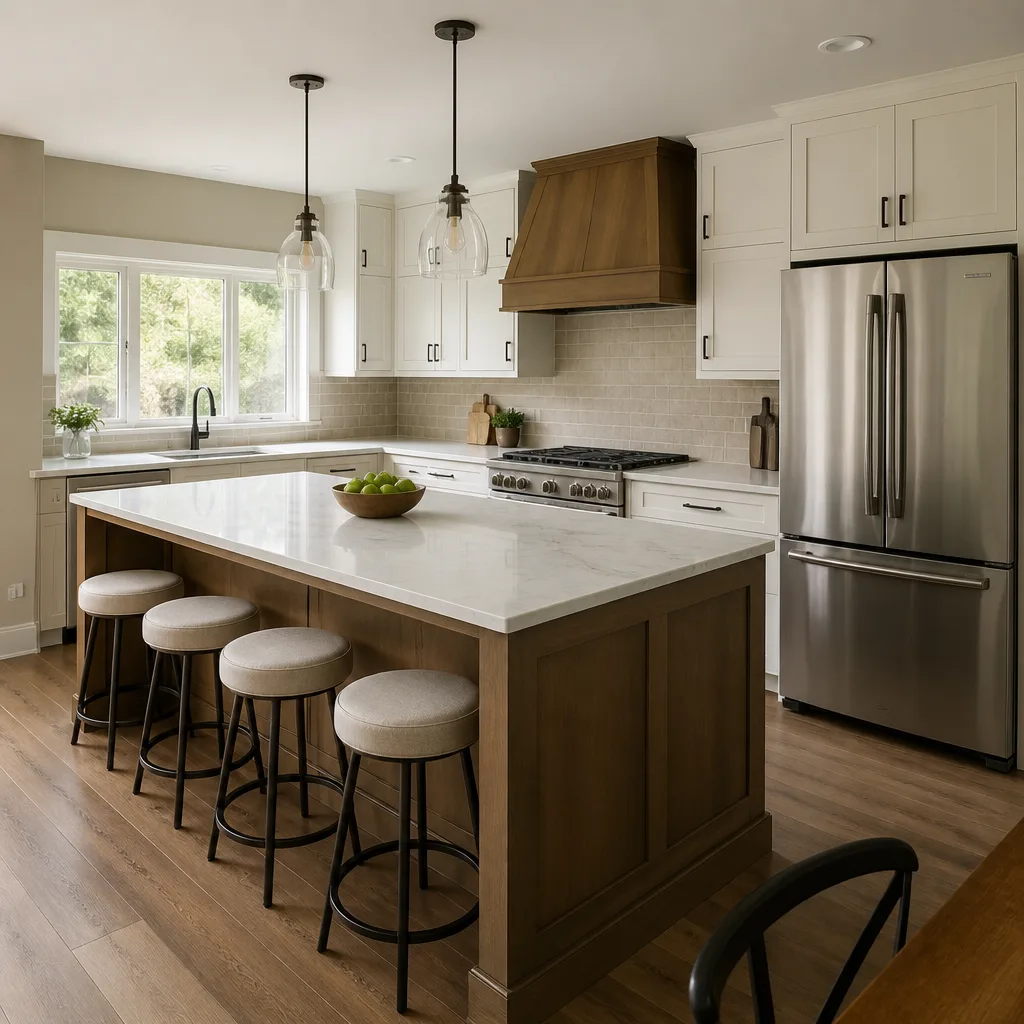
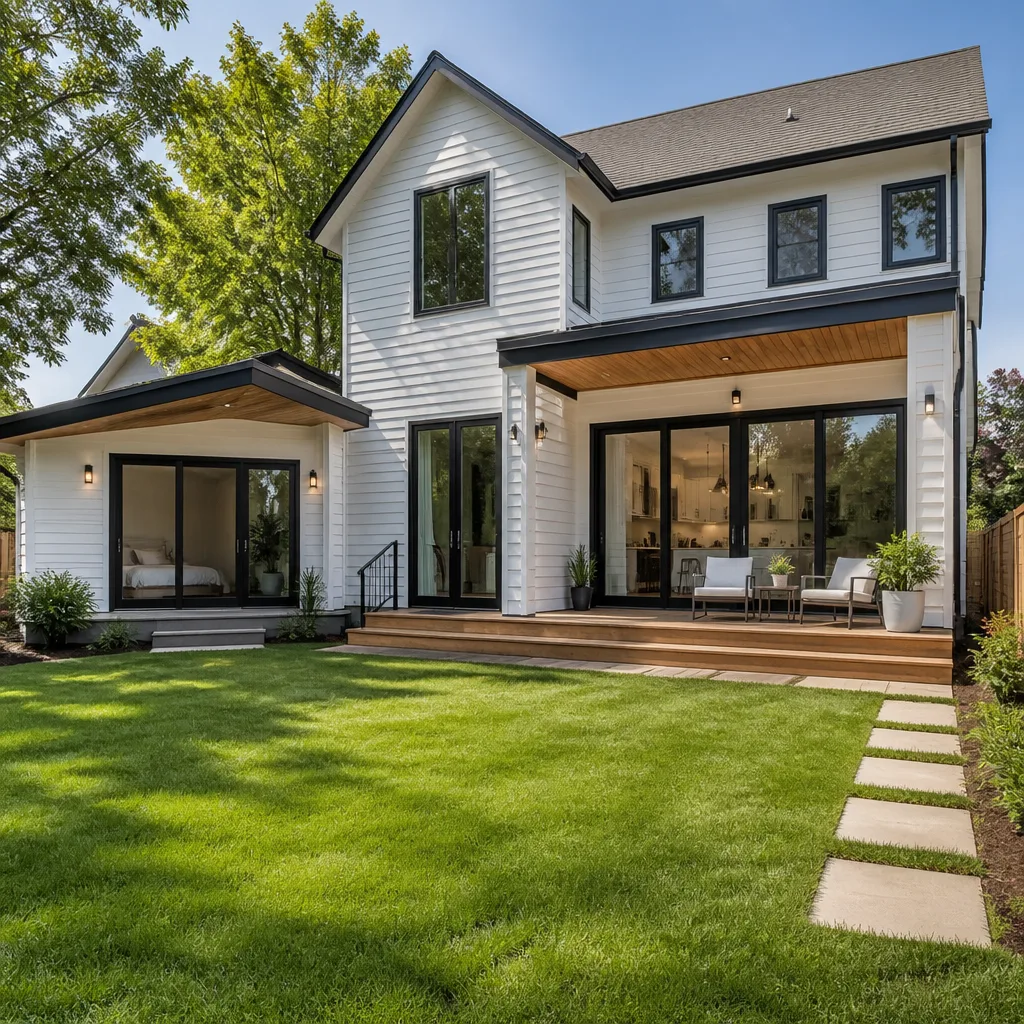
 Before
 After
After Before
 After
After Before
 After
AfterSakrete Roofing: The Los Angeles Owner’s Guide
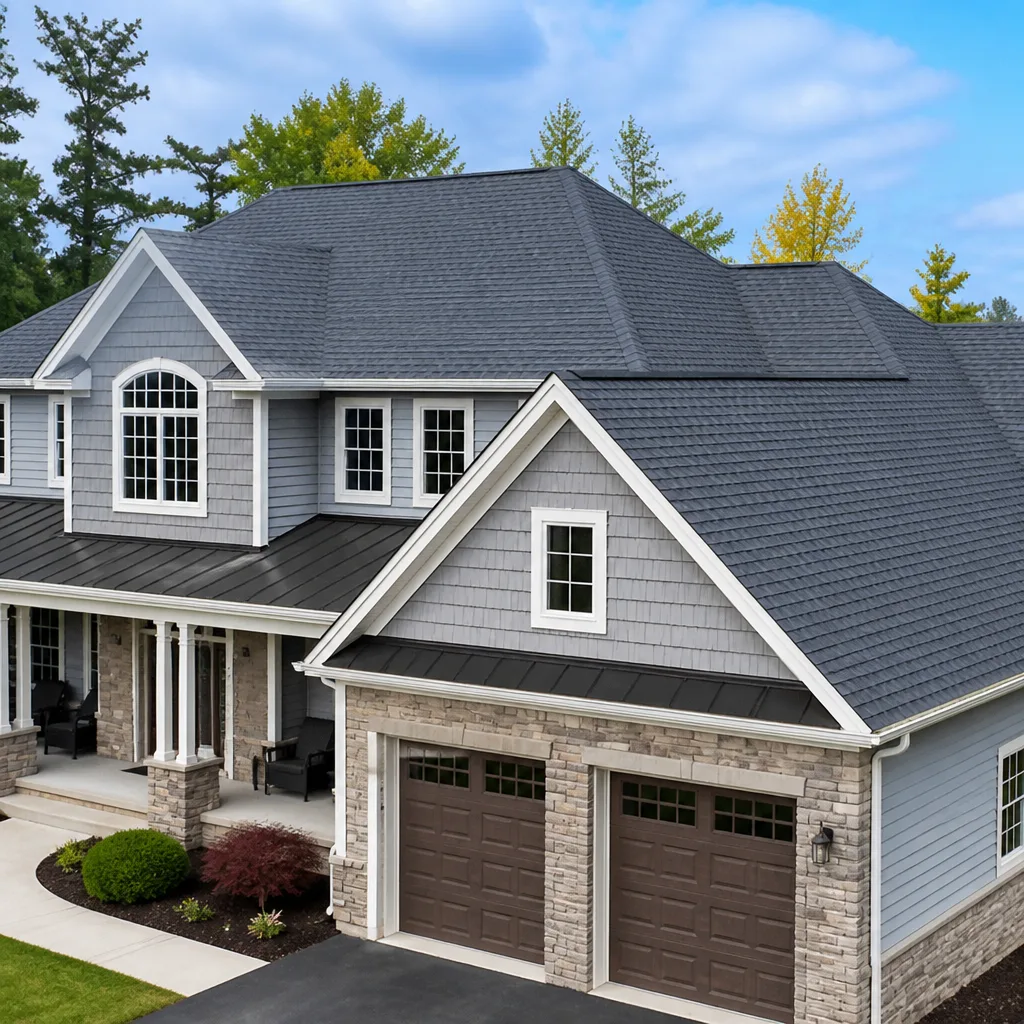
Sakrete-compatible roofing repair in Los Angeles typically runs $470-$2,125 for standard repairs and $9,440-$23,600 for full replacement, with most common part swaps completed in a single visit. We stock Sakrete-matched underlayment, fasteners, and membrane patches on our Los Angeles trucks, and we carry the full line of Sakrete roofing cement and sealant compounds specified for the region’s clay tile and composition shingle installations. Most Los Angeles homeowners discover a Sakrete roofing failure after the first fall rain, when a patch that held through summer heat suddenly weeps into the attic, or when they spot lifted tiles along the roof plane where the bedding compound has dried past its service life.
Which Sakrete Models This Applies To
Sakrete produces roofing materials across several product lines, and matching the right compound to your existing system matters more than most owners expect. The Sakrete Roof Patch line comes in both fiber-reinforced and standard formulations; the fiber version carries a higher solids content and is specified for clay and concrete tile bedding in Los Angeles installations where thermal cycling is severe. Sakrete Roofing Cement, typically sold in 10.1-ounce cartridges or 5-gallon pails, is graded by viscosity: the trowel-grade pail compound is for embedded flashing and counter-battens, while the caulk-gun grade is for surface sealing and small penetration repairs.
To identify what you’re working with, check the cured color and texture. Original Sakrete bedding on Los Angeles tile roofs from the 1990s and 2000s cures to a dark gray with visible fiber strand; newer formulations since approximately 2015 cure lighter and smoother. The product date code, if visible on any leftover packaging, runs as a Julian date plus plant code. We also see Sakrete products used as the secondary sealant on systems where the primary underlayment is another brand, which changes the compatibility requirements for repair.
OEM Sakrete compounds are formulated to cure with specific elongation rates that match the brand’s own underlayment movement. Aftermarket equivalents exist, and some meet the same ASTM D4586 standard, but we’ve found the bond line fails prematurely on hot Los Angeles slopes when the elongation rates don’t pair. For warranty-backed work, we specify Sakrete-to-Sakrete or we document the aftermarket equivalent’s test data in your written scope.
Signs Your Sakrete Roofing Is Failing
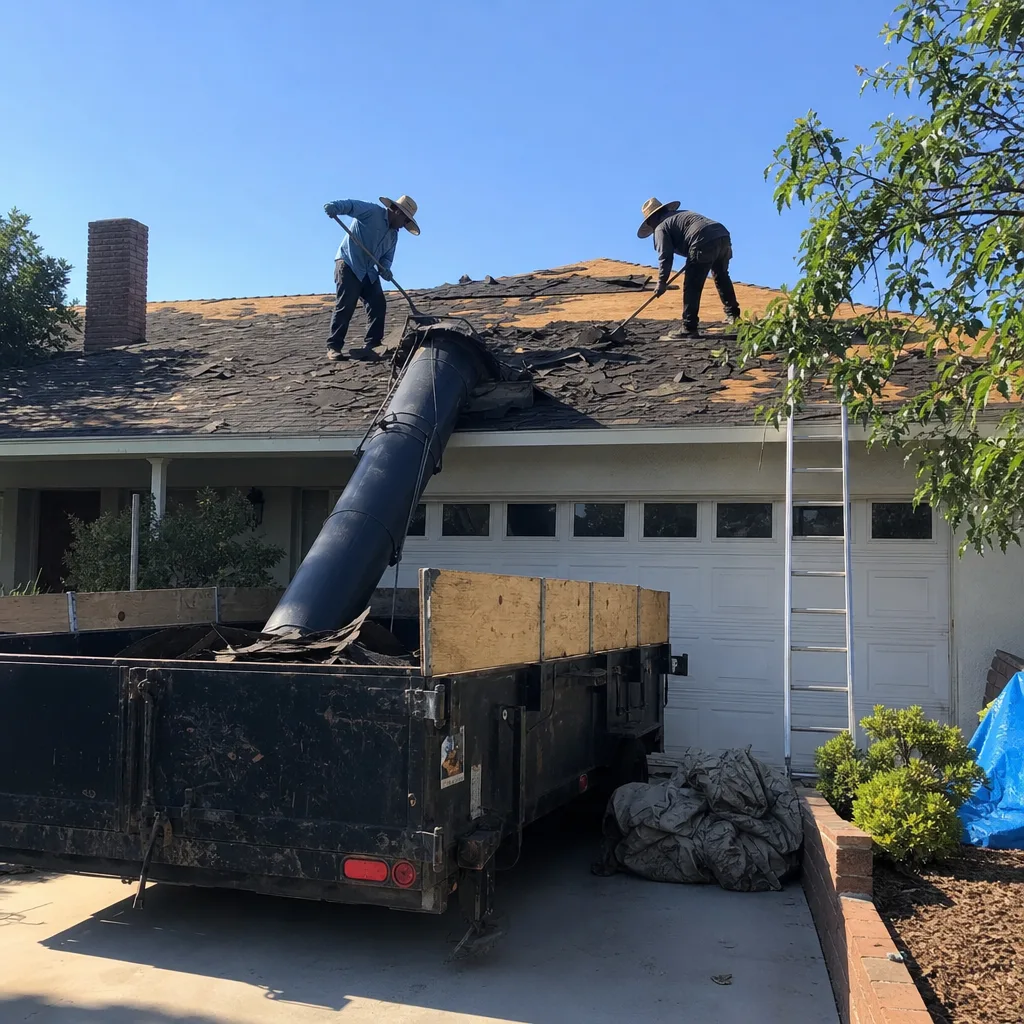
- Cracked or missing tile bedding along ridges and hips. The Sakrete compound that originally locked your mission tiles or flat s-tiles in place has lost its adhesion. In Los Angeles, this typically shows first on south and west exposures where daily thermal swing exceeds 40 degrees in summer.
- Water staining on rafter tails or soffit vents after rain. The stain pattern usually traces back to a failed penetration seal where Sakrete roofing cement was the primary waterproofing. The compound has either dried past its elastic limit or was applied too thin at original installation.
- Granule loss on composition shingles that exposes the mat. When Sakrete-compatible sealants were used as the flood coat on older built-up systems, UV degradation of the asphalt layer accelerates once the mineral surfacing washes away. Los Angeles smog and high-UV index days compound this.
- Lifting or curling at shingle tabs in the field of the roof. The self-sealing strip has failed, and the repair compound that was supposed to re-adhere it has either been applied over dust or has itself aged out. We see this often in the Basin where Santa Ana winds test every marginal bond.
- Visible cracking in the flashings around chimneys or vent pipes. Sakrete flashing cement in these joints is designed to remain flexible; when it goes chalky and rigid, the metal movement of thermal expansion cracks it through. The crack is usually hairline until the first hard rain opens it.
 Before
 After
AfterReplacement Cost & What’s Included
Roof repair in Los Angeles with Sakrete-specified materials runs $470-$2,125 installed, depending on access difficulty, the square footage of affected area, and whether we’re matching existing tile or working with composition shingles. Full roof replacement where Sakrete products form part of the system specification ranges $9,440-$23,600, with clay tile at the upper end and standard composition at the lower. Metal roof installations, which use Sakrete compounds differently at penetration details, run $17,700-$47,200.
Our written quote itemizes: removal of failed material to sound substrate, application of compatible primer where specified by Sakrete’s current TDS (technical data sheet), installation of new compound or replacement underlayment, and matching replacement tile or shingle if the failure damaged the finish layer. Under Clause 1 of the Haven Standard, that price is fixed; if we find additional damage during tear-off, we document it with photos, write a change order with a line-item price, and no work proceeds until you sign. The 365-Day Done Right Promise covers the repair, and you receive the documented photo record before we invoice.
DIY or Call Us?
There’s a safe middle ground for the cautious owner. You can walk the perimeter with binoculars and note which tiles are lifted or which shingles are missing. You can check the attic during rain for active dripping, which tells you whether the failure is acute or still migrating. You can photograph any cracked sealant for reference.
What we don’t recommend: climbing a Los Angeles clay tile roof without proper ladder tie-off and roof hooks, because tile breaks underfoot and the slope is steeper than it looks from the ground. We also don’t recommend applying new Sakrete compound over old without removing the failed material, because the bond forms to dust and loose granules, not to sound substrate. The weight of roofing cement in a pail is significant; hauling it up a ladder with one hand while balancing on a slope is where most DIY injuries happen. If the repair involves more than a single tube of caulk-grade sealant on a penetration you can reach from a secure ladder, call us. We’ll give you a written price before anyone starts.
FAQs
Properly applied Sakrete roofing cement lasts 8-12 years on Los Angeles roofs, though south-facing exposures in the Basin often see 6-8 years due to UV load and thermal cycling. The fiber-reinforced formulations hold up better on tile bedding than the standard grade. Call (213) 652-7670 for an exact quote on replacement - estimates are free.
Surface cracks in otherwise sound compound can sometimes be bridged with new material if the substrate is dry and clean, but this is a temporary fix; the underlying age and UV damage remain. We photograph the condition and show you both options in writing. Call (213) 652-7670 for an exact quote - estimates are free.
Most Sakrete roofing repairs we handle in Los Angeles are completed in 2-4 hours of on-roof time, with full replacement running 3-5 days depending on square footage and tile availability. We schedule so the roof is never left open overnight. Call (213) 652-7670 for an exact quote - estimates are free.
We carry Sakrete Roof Patch, Roofing Cement in both caulk and trowel grades, and compatible fasteners and underlayment on our Los Angeles trucks. For full replacement jobs, we order to the specific color and formulation match once the written scope is approved. Call (213) 652-7670 for an exact quote - estimates are free.
Rowan Construction Group Los Angeles is an independent service provider and is not affiliated with Sakrete. We also stock parts for KraftMaid, Cambria, and Silestone systems where they integrate with roofing and exterior work.
Ready to get a written price before anyone picks up a tool? Call (213) 652-7670 to schedule your free estimate. We’ll review your roof, document what we find with photos, and deliver a flat written price with line-item scope. Under Clause 1 of the Haven Standard, that number doesn’t change unless you sign a change order. Grant Rowan started this company because he got tired of watching homeowners get vague bids with no detail, and he figured the fix was straightforward: write it down, price it out, explain what you’re doing and why. If it’s not written down, it didn’t happen.
Written by Grant Rowan, Owner, Rowan Construction Group Los Angeles at Rowan Construction Group Los Angeles, serving Los Angeles and nearby areas.