
Free written scope consultation - allowances, timeline, and change-order rules on paper before a single trade is scheduled
 Before
 After
After Before
 After
After Before
 After
AfterCWS Fence Installation: The Los Angeles Owner’s Guide
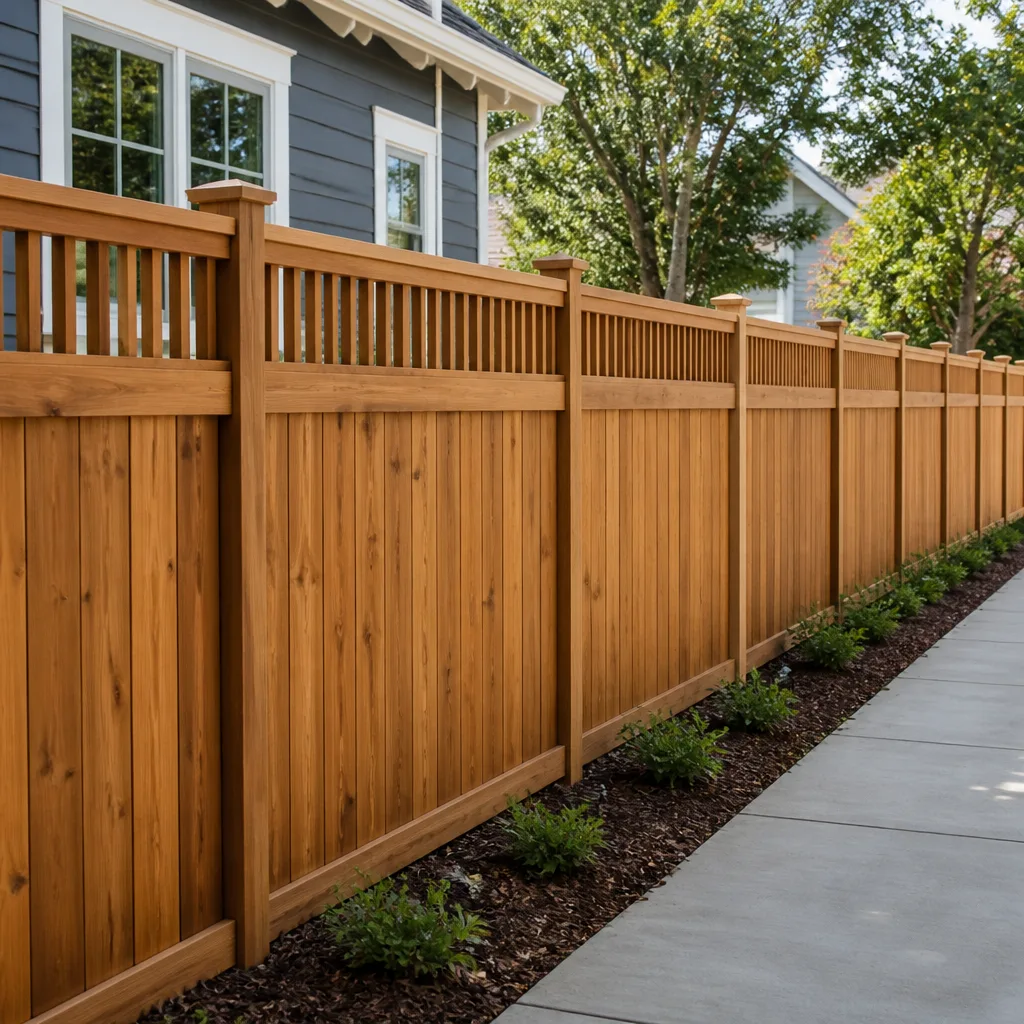
We stock and install CWS-compatible fence systems across Los Angeles, with typical vinyl fence installations running $4,130-$10,620 depending on linear footage, grade changes, and whether we’re anchoring into hillside decomposed granite or flat Valley clay. Most CWS fence projects in Los Angeles are measured, quoted, and scheduled within a single visit because we carry the post brackets, rail inserts, and cap stock for their most common residential series on our trucks. Homeowners usually discover a CWS fence is failing when the bottom rail sags between posts, pickets start pulling free from the routed grooves, or the entire line leans after a Santa Ana wind event that the original installer didn’t account for.
Which CWS Models This Applies To
CWS, or Countrywide Fence Supply, manufactures vinyl fence in several series that were heavily distributed through Los Angeles-area lumber yards from the mid-2000s through the late 2010s. The two most common lines we encounter are the CWS Hampton privacy series with its 7/8-inch thick pickets and the CWS Sierra semi-privacy with the stepped top rail and narrower 6-inch picket spacing. Both use a proprietary 2-inch by 3-1/2-inch bottom rail with internal aluminum reinforcement, but the rail insert gauge differs between early production (0.040-inch, 2004-2011) and later runs (0.055-inch, 2012 onward). The brackets are not interchangeable.
To identify your series, check the inside face of the post cap for an embossed date code, or measure the wall thickness of a picket at the routed groove. If it’s under 0.060-inch, you’ve got the earlier spec, which is more prone to UV embrittlement in Los Angeles’s high-UV climate. We source OEM CWS components where they’re still available, but we’ve also vetted two aftermarket equivalents, Ply Gem and CertainTeed Bufftech, whose rail dimensions match within 1/32-inch and carry comparable fade warranties. Rowan Construction Group Los Angeles is an independent service provider, not affiliated with CWS.
Signs Your CWS Fence Installation Is Failing
- Bottom rail bows or sags between posts. The internal aluminum insert has corroded at the bracket point, usually where the rail end was cut and not sealed with vinyl cement. Water wicks in during rare but heavy Los Angeles downpours, and the insert swells or the rail wall cracks from the pressure. We see this most in Mid-City and Koreatown installations where the original crew skipped the end-cap step.
- Pickets rattle in the wind or pull completely free. The routed groove in the rail has widened from thermal cycling, Los Angeles’s 40-degree daily swings in summer, or the picket tongue has cracked from UV degradation. Once the friction fit is gone, the picket has no mechanical connection left.
- Gate drags or won’t latch. CWS gates use a steel frame inside the vinyl wrapper, and the bottom corner bracket is the first failure point. The steel rusts, the wrapper cracks at the stress concentration, and the gate goes out of square. We’ve replaced dozens of these in Silver Lake and Echo Park where the gate sees daily use.
- Posts lean after wind or visible soil movement. The concrete footing has fractured or was never deep enough for the lateral load. In hillside areas like Mount Washington or Glassell Park, we regularly find 24-inch footings where 36-inch minimum was needed for the expansive clay.
- Color has chalked to a noticeably lighter shade. CWS’s early TiO2 loading was adequate for Midwest UV levels, not Los Angeles’s 284 days of sun annually. The vinyl surface oxidizes, becomes porous, and the structural wall begins to thin. By the time you notice the color shift, the material has lost roughly 30% of its original impact strength.
 Before
 After
AfterReplacement Cost & What’s Included
Vinyl fence installation in Los Angeles runs $4,130-$10,620 for a standard residential project, with the final number driven by three factors we itemize in every written quote: linear footage, terrain grade change, and whether we’re removing an existing failed installation or working on bare soil. A straightforward 80-foot privacy run on flat ground in the San Fernando Valley typically lands near the lower third of that range. The same footage on a 15% grade in the Hollywood Hills, with retaining and stepped panels, pushes toward the upper end.
Every quote includes the CWS-compatible or equivalent components, pressure-treated or galvanized steel posts as specified, concrete footings to depth, and all fasteners. We pull permits when required by the local jurisdiction, Los Angeles Department of Building and Safety or otherwise, and include that cost in the written scope. Under Clause 1 of the Haven Standard, the price you sign is the price you pay; no work proceeds on a change until the change order is signed. Our 365-Day Done Right Promise covers the installation, and the manufacturer’s fade and structural warranty covers the materials.
DIY or Call Us?
There’s a short list of things a homeowner can safely check before calling: confirm the post is actually loose in the footing and not just the cap spinning, measure the sag against a string line to see if it’s the rail or the post that moved, and look for the embossed date code to know which parts to order. What goes wrong fast is everything else. Vinyl fence rails are structural members; cutting one to length without de-burring the end creates a stress riser that will crack within two thermal cycles. Post holes in Los Angeles clay need to go 36 inches minimum, and mixing concrete in a wheelbarrow to the right slump for a 4-inch sonotube is harder than the videos suggest.
More critically, if your fence line borders a sidewalk, street, or neighboring property, Los Angeles requires a permit for anything over 42 inches in height, and the setback rules vary by zone. We’ve been called in after DIY installations that had to come down because the permit wasn’t pulled. If it’s not written down, it didn’t happen. Call (213) 652-7670 and we’ll measure, spec the right CWS-compatible components, and give you a flat written price before anyone picks up a tool.
FAQs
In Los Angeles’s high-UV environment, an original-spec CWS vinyl fence typically shows functional failure at 12-18 years, with the bottom rail and gate frame going first. The newer 0.055-inch wall spec and improved capstock formulations from equivalent manufacturers extend that to 20-25 years if installed with proper drainage and sealed rail ends. Call (213) 652-7670 for an exact quote on replacement - estimates are free.
Partial repair is viable if the failure is isolated to one rail, one gate, or one leaning post, and the remaining pickets retain their original wall thickness and color match. Once chalking is widespread or multiple rails are sagging, replacement is more cost-effective than chasing sequential failures. We document the condition with photos and give you both options in writing.
A standard 80-120 linear foot residential installation in Los Angeles takes two to three working days, assuming no utility locates delay and the footing concrete can cure in mild weather. Hillside work, custom gate fabrication, or LADBS permit inspection scheduling can extend that. We include the realistic timeline in the written scope, not a best-case guess.
We stock the most common CWS-compatible rail inserts, post brackets, and cap styles for the Hampton and Sierra series, along with the tools to cut and route vinyl in the field. For discontinued CWS colors or profiles, we can typically match from our aftermarket equivalents within a week. Call (213) 652-7670 to confirm compatibility with your specific installation - estimates are free.
Written by Grant Rowan, Owner, Rowan Construction Group Los Angeles at Rowan Construction Group Los Angeles, serving Los Angeles and nearby areas.