
Free written scope consultation - allowances, timeline, and change-order rules on paper before a single trade is scheduled
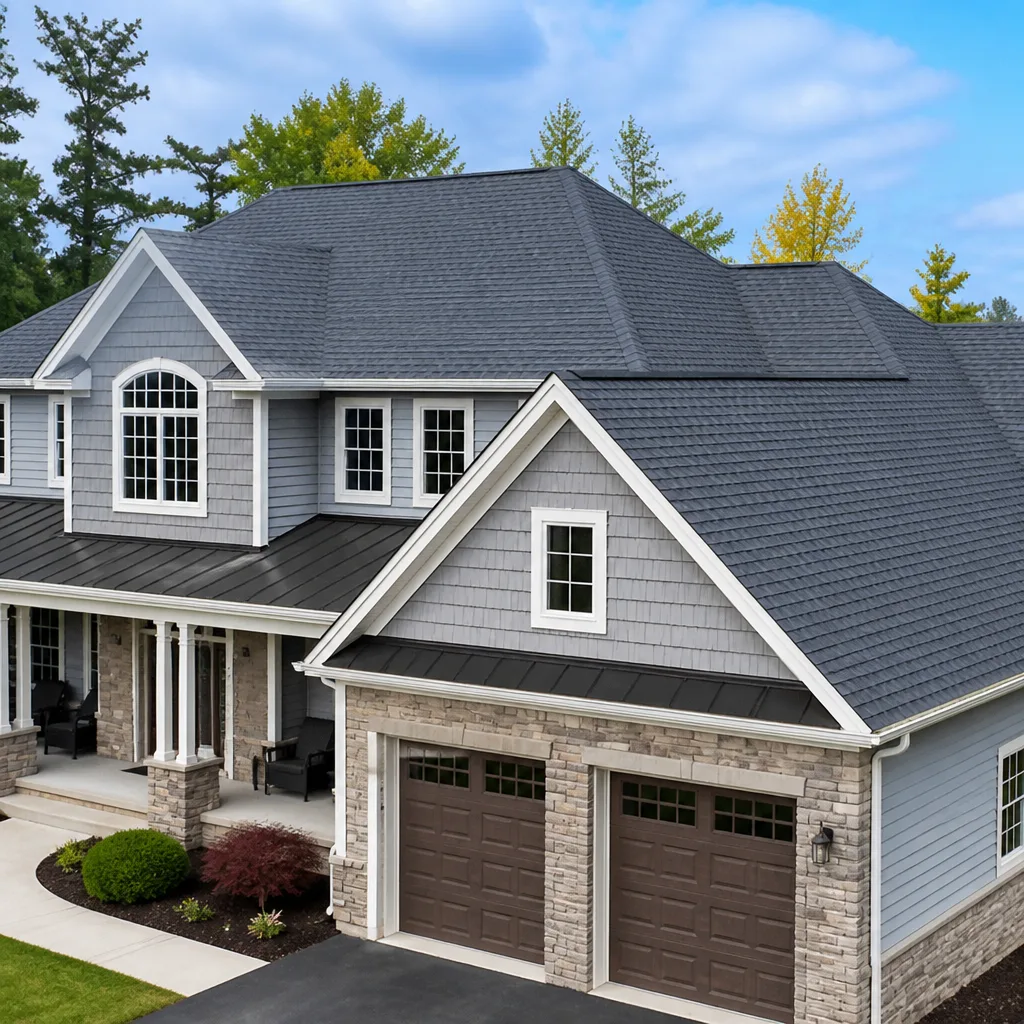
 Before
 After
After Before
 After
After Before
 After
AfterHow Much Does Roof Repair Cost in Los Angeles?
Roof repair in Los Angeles typically costs between $470 and $2,125, depending on the type of damage, the roofing material, and how accessible your roof is. Most homeowners in neighborhoods like Silver Lake, Northridge, and Culver City pay somewhere in the middle of that range for a focused repair – a few damaged shingles, a cracked tile field, or a failed pipe boot flashing. A written quote before any work starts is the only number that matters, and under Clause 1 of the Haven Standard, that is exactly how Rowan Construction Group operates.
If you want a flat price with a written scope delivered before anyone climbs onto your roof, call (213) 652-7670. Estimates are free.
Roof Repair Cost Breakdown (2026)
The table below reflects current labor and material rates in the Los Angeles market. These are the ranges Rowan Construction Group actually works within – not a national average copy-pasted from a syndicated database. LA-specific factors like steep coastal slopes in Pacific Palisades, clay tile roofs common throughout the San Fernando Valley, and the single-ply flat membranes that dominate Mid-Wilshire apartment conversions all push costs in directions a generic estimate misses.
| Repair Type | Typical LA Cost Range | Notes |
|---|---|---|
| Minor shingle repair (1-5 shingles) | $470 – $720 | Common after Santa Ana wind events |
| Flashing repair or replacement | $550 – $1,050 | Chimney, skylight, and valley flashing most common |
| Tile roof repair (cracked or slipped tiles) | $710 – $2,950 | Material matching adds time; Spanish clay tiles require sourcing |
| Flat roof patch (EPDM or TPO membrane) | $600 – $1,400 | Blistering common on low-slope roofs in the Valley heat |
| Pipe boot or vent boot replacement | $470 – $750 | A top cause of interior water stains in LA homes built 1980-2000 |
| Soffit and fascia repair | $590 – $1,100 | Often discovered during repair inspections in older Craftsman stock |
| Ridge cap replacement | $650 – $1,200 | Exposed ridge caps take the worst of Santa Ana conditions |
| Structural deck repair (rotted sheathing) | $900 – $2,125 | Rare but seen after multi-year slow leaks; requires shingle removal first |
What Pushes the Price Up
The upper end of the range is almost always driven by one of three things: material complexity, access difficulty, or hidden secondary damage. A standard three-tab asphalt repair in Reseda is straightforward. A clay tile repair in Hancock Park is a different project – sourcing matching handmade tiles from the same production run can take a few days, and a crew that rushes the mortar bed tends to leave a repair that fails within two seasons. Steep pitches above 6:12 require safety equipment and add labor time. And when water has been sitting in the sheathing, the repair scope expands.
Secondary damage is the number Rowan’s photo documentation is designed to surface early. Before any work starts, the crew photographs the roof surface, the substrate, the flashing condition, and the interior attic space if access is possible. The customer gets that photo record. If the scope changes, a signed change order comes before the additional work does – that is not a courtesy, it is how every project runs.
What Keeps the Price Down
Catching a problem early is the single most reliable way to keep costs at the lower end. A loose pipe boot caught in September costs $470-$750 to fix. That same boot, ignored through an El Nino winter, can produce $2,000 in deck and drywall damage. Grouping small repairs into one visit also reduces the fixed cost of mobilization and roof access – if your home has two minor issues, addressing both in one service call saves real money compared to two separate trips.
What Affects Roof Repair Pricing in Los Angeles
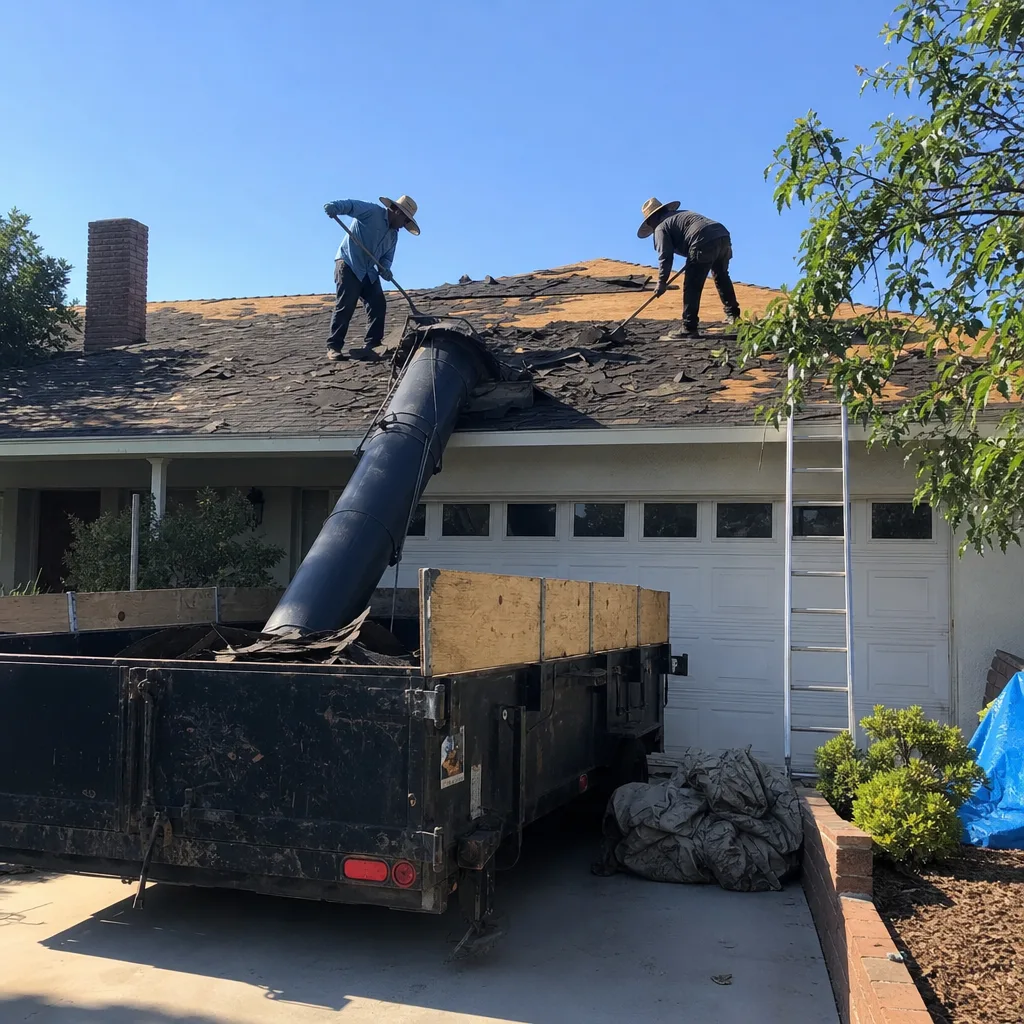
- Roofing material: Asphalt shingles – products from GAF and Owens Corning make up the bulk of what Rowan sources – are the least expensive to repair. Clay and concrete tile roofs, which are the dominant material in San Fernando Valley neighborhoods like Encino and Tarzana, cost more because tile matching takes time and mortar work requires curing. A low-grade tile replacement that skips the mortar bed properly fails within a few years in LA’s thermal cycling conditions.
- Roof pitch and accessibility: Flat and low-slope roofs in Mid-Wilshire or the older stock in Leimert Park are straightforward to access and typically land at the lower cost range. Steep residential roofs in the hills – Glassell Park, Mount Washington, Montecito Heights – require fall-protection rigging, which adds labor time and reflects in the final number.
- Local weather damage patterns: Los Angeles has two primary damage seasons. Santa Ana wind events between October and February tear off ridge caps, lift flashing, and crack aged tiles. Winter storms – particularly in El Nino years – then find every gap the wind opened. Homes in the western San Fernando Valley and hillside corridors see this cycle more intensely than coastal properties, which face UV degradation and salt air exposure as their primary material stressors.
- Age of the existing roof: A roof under 10 years old with isolated damage is a clean repair. A roof over 20 years old that has lost granule coverage, has brittle underlayment, and shows multiple soft spots is a different conversation – isolated repairs may hold for a season, but a full Roof Repair in Los Angeles scope assessment may show that targeted patching is spending money toward replacement rather than away from it. Rowan’s written inspection report describes the condition plainly so the homeowner can make that call with real information.
- Number of shingle or tile layers: Los Angeles building code limits asphalt roofs to two layers. If a repair exposes that the existing roof is already double-layered, repair options narrow – any structural work typically requires a tear-off, which repositions the cost. Rowan documents layer count during the inspection, not after the crew has started.
- Permit requirements: Most minor repairs in Los Angeles do not require a permit. Structural deck repairs, skylight additions, and HVAC equipment relocations on the roof do. The City of LA’s Department of Building and Safety requires permits for structural alterations, and pulling them properly adds to the timeline but protects the homeowner’s title and insurance position. Rowan includes permit research as part of the written scope, not as a surprise line item.
 Before
 After
AfterRoof Repair vs. Roof Replacement in Los Angeles
This is the question homeowners in Los Angeles ask most often, and the honest answer depends on what the inspection finds – not on what is easier to quote. Roof replacement in Los Angeles runs $9,440 to $23,600 for a standard residential structure. A repair at $470 to $2,125 is the right call when the damage is localized, the underlying deck is sound, and the remaining roof has meaningful service life left.
The rule of thumb the industry uses – and which Rowan applies plainly in every inspection report – is the 50 percent rule: if the cost of repairs approaches 50 percent of a full replacement, the replacement is usually the better financial decision. In practice, that threshold is rarely reached on a single repair visit. Where it comes up is when a homeowner has been patching the same roof for several years and the cumulative repair spend is starting to close in on replacement cost.
Grant Rowan’s team produces a written comparison when the inspection reveals a borderline case. The customer sees both numbers, the condition assessment, and the documented photo record – then decides. No one upsells a replacement from a repair call without evidence to support it. That is what the Haven Standard’s photo documentation is for: the homeowner leaves knowing exactly what was found, not just what was quoted.
Los Angeles Roofing Material Guide: Cost and Context
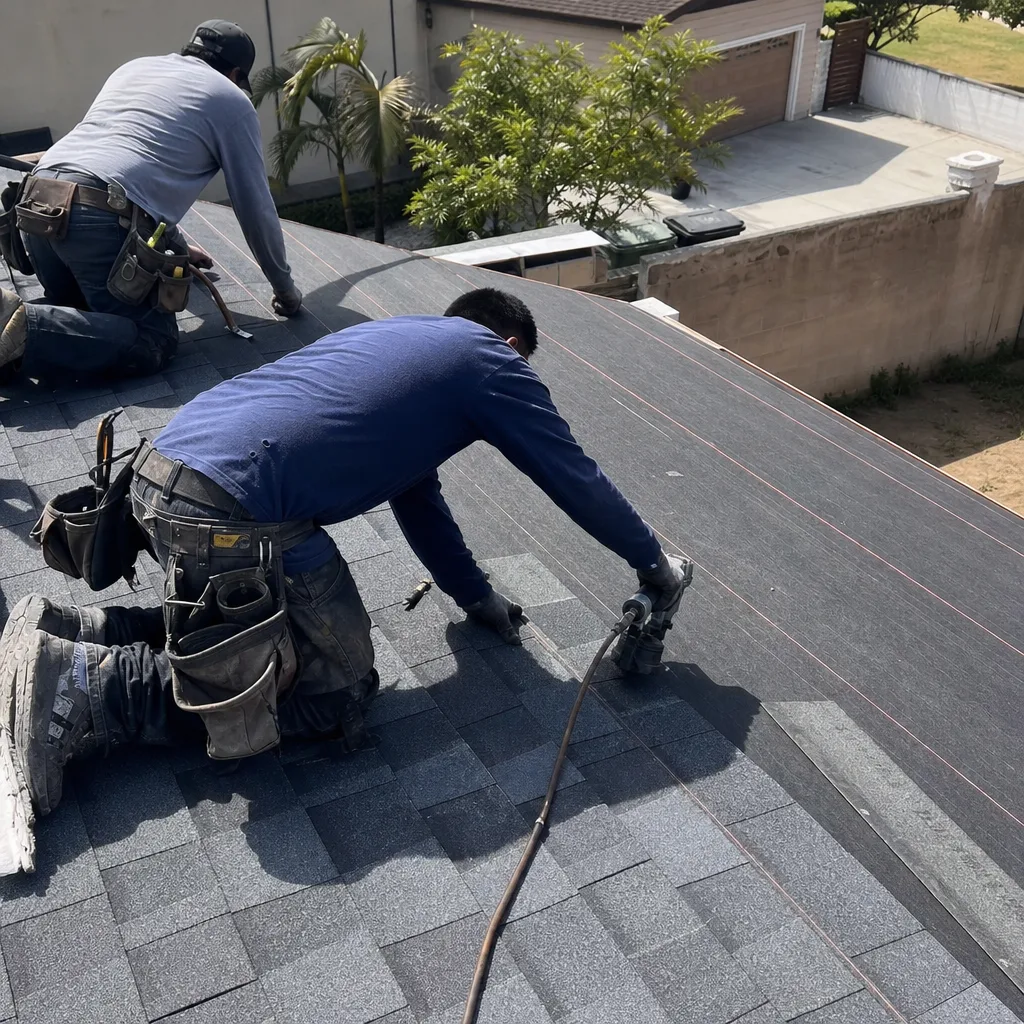
Asphalt Shingles
The most common material in LA residential neighborhoods like Van Nuys, Sylmar, and most of the South Bay. GAF Timberline and Owens Corning Duration shingles are the Rowan standard – both are available in Class A fire-rated versions, which matters in Los Angeles County’s Wildland-Urban Interface zones. Repairs on asphalt shingle roofs are the fastest to execute and the easiest to price, which is why they tend to land in the $470-$900 range for isolated damage.
Clay and Concrete Tile
Spanish-style clay tile is the signature material of older homes throughout Hancock Park, Los Feliz, and much of the San Fernando Valley’s mid-century housing stock. Tile roof repairs in Los Angeles range from $710 to $2,950 depending on how many tiles need replacement, whether matching material is available from stock or requires sourcing, and whether the mortar bed underneath has failed. A failed mortar bed looks like a cracked tile problem but is actually a substrate problem – replacing the tile without addressing the bed produces a repair that fails again.
Flat and Low-Slope Membranes
Flat roofs are standard on Mid-Century Modern homes in Los Feliz and Silver Lake, on converted apartment stock across Mid-Wilshire, and on most commercial-adjacent residential properties. The materials – EPDM rubber, TPO single-ply, or built-up modified bitumen – fail differently than pitched roofing. Blistering, ponding water, and seam separation are the primary failure modes. Patches on flat roofs cost $600 to $1,400 depending on the membrane type and the size of the affected area.
Metal Roofing
Less common on residential stock in Los Angeles but growing in hillside communities where fire resistance and longevity are the decision drivers. Metal roof repairs require matching panel profiles and finishes, which can add sourcing time. Full metal roof installation runs $17,700 to $47,200; repairs are typically in the $700 to $1,800 range depending on panel damage extent.
How to Save on Roof Repair in Los Angeles
The most effective cost-reduction strategy is timing. Roofing labor demand in Los Angeles spikes immediately after major wind events and storm periods. Getting an inspection and a written quote in September – before the Santa Ana season begins – means you are scheduling work at standard rates rather than competing with every other homeowner in Reseda and Chatsworth who discovered a leak in November.
- Get a second opinion on any written estimate. Rowan offers a free second opinion on any competitor’s written estimate, reviewed line by line. A quote that separates labor, material, and disposal is a quote you can actually evaluate. One that gives you a single number with no breakdown is one that is harder to compare accurately.
- Batch small repairs. If your inspection reveals two or three minor issues – a pipe boot, a few loose shingles, a soft ridge cap section – addressing them in one visit is materially cheaper than three separate service calls. The mobilization cost is fixed; the additional repair time is incremental.
- Document what you find now, even if you don’t repair immediately. The photo record Rowan delivers on every visit is not just for the current repair. It establishes a baseline condition that protects you in an insurance conversation and helps you track whether a slow deterioration is accelerating.
- Understand your homeowner’s insurance position before you call a contractor. Some repair types – wind damage from a documented Santa Ana event, hail damage when hail reached your area – may be covered under your policy. Knowing that before the repair quote arrives changes which conversation you have first.
- Ask for a flat written price, not a time-and-materials quote. Under the Haven Standard, Rowan delivers a flat price with a written scope before any work starts. A time-and-materials estimate for a roof repair means the final number depends on how long the crew takes – and you have no contractual anchor. Get the flat number in writing.
For a free written estimate on any roof repair in Los Angeles, call (213) 652-7670. The quote comes with a written scope, and no work starts until you have signed off on both.
The Rowan Process: What Happens Before, During, and After a Roof Repair
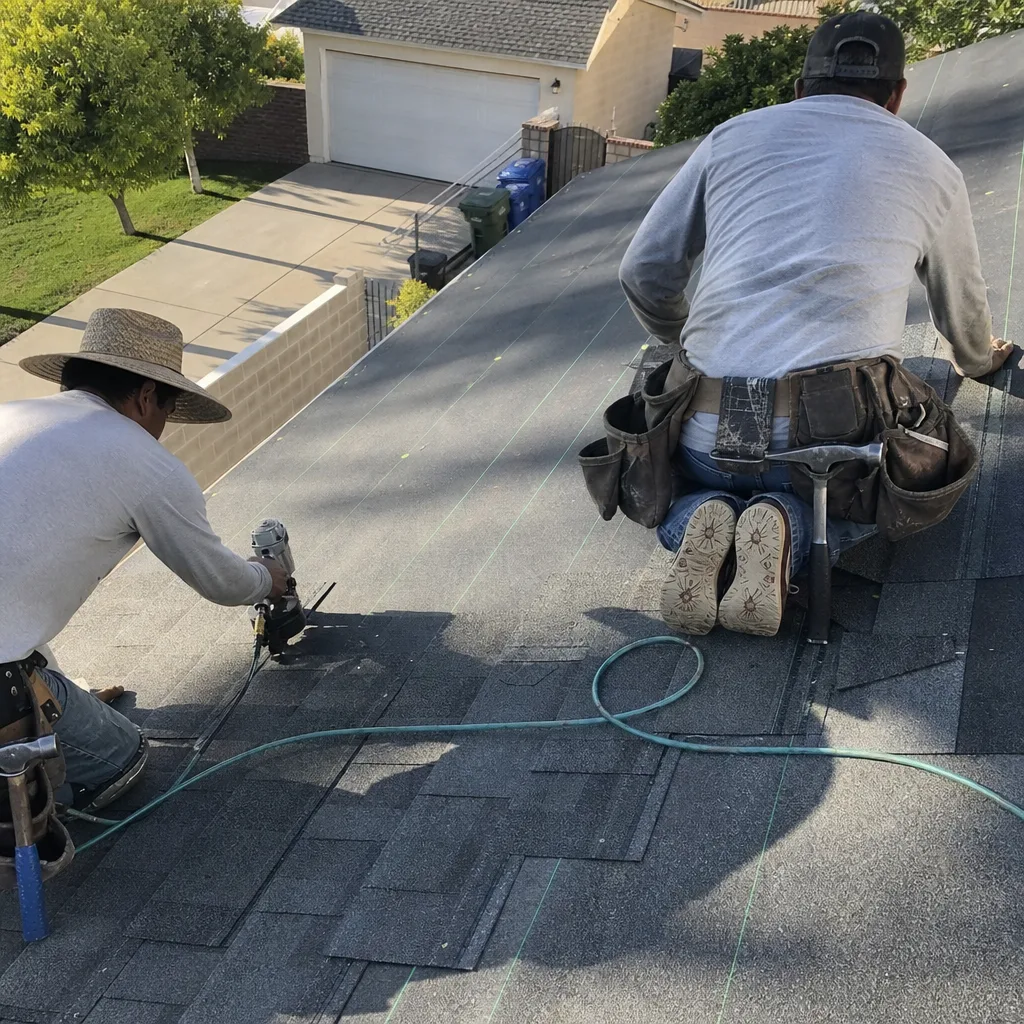
This section exists because a price range without a process description is just a number – and a number without context does not tell you whether the contractor behind it is going to protect your home or just collect a check.
When you call Rowan Construction Group in Los Angeles, a live person answers. Not a voicemail system, not an after-hours recording. A live person, because that is how the Haven Standard operates. The first conversation is about what you have seen – a stain on the ceiling, a missing shingle after a wind event, a tile that shifted. The crew visit follows with a full inspection: surface condition, flashing condition, layer count, attic access if available.
The inspection produces two things before any repair discussion: a documented photo record and a written scope with a flat price. Every crew member is background-checked and uniformed. Grant Rowan’s teams have been working this way since 2007, across more than 4,000 projects – the written-price-before-work-starts discipline is not a sales feature, it is the only way Rowan runs a job. If the scope changes once the crew is on the roof – which occasionally happens when a tile removal reveals unexpected deck damage – a signed change order comes to you before the additional work proceeds. That is Clause 1 of the Haven Standard, applied in the field.
When the repair is complete, you receive the updated photo record showing the finished work. The 365-Day Done Right Promise applies to every repair: if it is not right, Rowan makes it right. The guarantee is printed in the terms, not stated in a handshake.
Why Los Angeles Roofs Fail Faster Than the National Average
This is not a scare tactic – it is climate and geography. Los Angeles homeowners deal with conditions that accelerate roofing material degradation in ways that the national average useful-life figures do not reflect.
UV exposure at Southern California latitudes is intense year-round. Asphalt shingles in Van Nuys or Woodland Hills lose granule coverage faster than the same product installed in Seattle. The thermal cycling – cold nights, hot days, particularly in the inland Valley – causes expansion and contraction stress that eventually cracks aged mortar beds and fatigues flashing sealants. Santa Ana winds, which the National Weather Service confirms as a recurring pattern across LA County from October through February, create both direct physical damage – lifted shingles, cracked tiles – and the secondary damage that follows when unsealed gaps meet winter rainfall.
And for the approximately 150,000 homes in Los Angeles County’s designated Wildland-Urban Interface zones – running through communities like Sylmar, Tujunga, Altadena, and Malibu – fire-rated roofing material is not optional. LA County building code requires Class A fire ratings in these zones, which affects both material selection and repair compliance. A repair that substitutes non-rated material in a WUI zone is not just a quality issue; it is a code violation that can affect your insurance coverage.
From the home inspection through the final photo record, Rowan’s process is built for the specific conditions Los Angeles imposes – not for a generic residential market that does not have Santa Ana seasons.
FAQs: Roof Repair Cost in Los Angeles
How much does a basic roof repair cost in Los Angeles in 2026?
A basic roof repair in Los Angeles costs $470 to $720 for minor isolated damage – a few lifted shingles, a single failed vent boot, a small flashing gap. More involved repairs, including tile work, flat membrane patches, or structural deck repairs, run from $900 to $2,125. The final number depends on material type, roof access, and whether secondary damage is found under the primary failure point. Call (213) 652-7670 for a free written estimate with a flat price.
Does homeowner’s insurance cover roof repair in Los Angeles?
It depends on the cause. Most Los Angeles homeowner policies cover sudden damage from wind events – a documented Santa Ana event that lifts shingles or cracks tiles is typically a covered peril. Gradual deterioration, aging material, and maintenance-deferred damage are generally not covered. Rowan’s photo documentation on every inspection visit gives you a clear record of what was found and when, which is the documentation an adjuster needs to evaluate a claim. Review your policy’s “sudden and accidental” language before filing.
How long does a roof repair take in Los Angeles?
Most residential roof repairs in Los Angeles are completed in one day. Minor shingle and flashing repairs take two to four hours. Tile repairs requiring material sourcing may involve a two-stage visit – one to assess and source, one to install. Structural deck repairs, where sheathing replacement is required, can run into a second day depending on extent. Rowan’s written scope tells you the expected timeline before the crew arrives, not after.
How do I know if I need a repair or a full replacement?
Repair is the right answer when damage is localized, the roof deck is structurally sound, and the remaining roofing material has meaningful service life. Replacement becomes the better financial decision when cumulative repair costs approach 50 percent of replacement cost, when the deck has widespread water damage, or when the roofing material is at end of life across the whole surface. Full roof replacement in Los Angeles runs $9,440 to $23,600. Rowan’s written inspection report documents the condition plainly so you can compare both numbers – repair scope cost versus replacement cost – before committing to either path.
Can I repair just part of a tile roof without replacing the whole thing?
Yes, but with one important caveat: the repair is only as good as the material match and the mortar bed condition beneath the replaced tiles. In Los Angeles tile repairs, the failure mode that leads to a second repair visit within a year or two is almost always a rushed mortar bed or a mismatched tile that is not seating correctly on the battens. Rowan sources replacement tiles before the repair date to confirm the match, and the photo record documents both the substrate condition and the finished installation. Call (213) 652-7670 to schedule a free inspection and written estimate.
What is the cheapest type of roof repair in Los Angeles?
Asphalt shingle repairs are the least expensive – typically $470 to $720 for minor damage. The material cost is low, shingles are available from GAF and Owens Corning stock without sourcing delays, and the installation time is short. Clay and concrete tile repairs cost more because material matching takes time. Flat roof membrane patches are mid-range, generally $600 to $1,400 depending on membrane type and affected area size.
Key Takeaways
- Roof repair in Los Angeles costs $470 to $2,125 for most residential repairs in 2026.
- Minor shingle and flashing repairs land at the lower end; tile work, membrane patches, and deck repairs push toward the upper end.
- Los Angeles-specific factors – Santa Ana wind damage, clay tile matching, steep hillside access, and WUI fire-rating requirements – affect both scope and price in ways national averages do not capture.
- A written flat price before work starts, a documented photo record, and a signed change order for any scope additions are the three things that protect you from an unexpectedly large final bill.
- Rowan Construction Group offers free second opinions on any written estimate and backs every repair with the 365-Day Done Right Promise.
- Call (213) 652-7670 to schedule a free inspection and receive a written estimate before any work begins.
Pricing reflects the Los Angeles market as of 2026. Rowan Construction Group Los Angeles offers free estimates – call (213) 652-7670.
Written by Grant Rowan, Owner at Rowan Construction Group, serving Los Angeles since 2007.
What Our Customers Say
"Good communication throughout. Weekly written update meant I never had to chase them."
- Nadine G."Driveway replaced properly with a base that will actually last. They explained why the cheaper quote was cheaper."
- Reggie O."Fence and retaining wall along a sloped boundary. They photographed the footing depth at each post, which mattered when the county inspector came."
- Iona F.